

Cosmetics Import Financing: How NY/NJ Personal Care Importers Manage Vendor Payment Terms
For a personal care importer on the East Coast, the math is tight long before a single bottle sells. Fragrance oils ship from France, glass and pumps come from Asia, and every one of those vendors wants paying well before your retail buyers pay you. Route it all through the country's busiest port and the wait only grows.
The Port of New York and New Jersey is one of the nation's busiest container gateways, handling nearly 775,000 TEUs in a single month in 2025. That scale means volume and reach, and it also means congestion and dwell time that stretch the gap between paying a vendor and selling the goods.
Managing that gap is what separates a smooth season from a cash crunch. This guide covers why vendor payment terms run tight for personal care importers, the pressures specific to the NY/NJ corridor, and how importers keep vendors paid without draining their cash.
Why Vendor Payment Terms Run Tight for Personal Care Importers
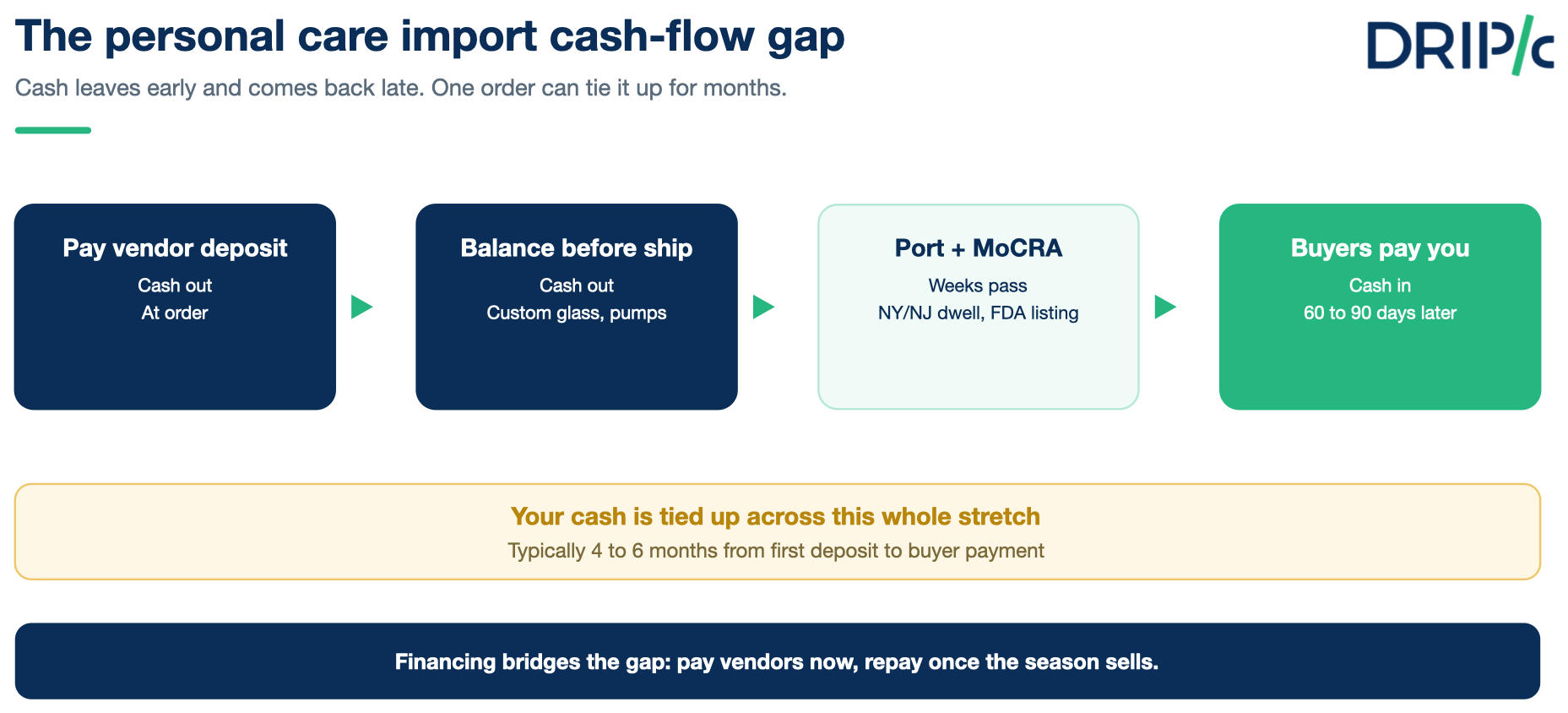
Personal care is a deposit-heavy business. Overseas vendors of fragrance concentrate, glass bottles, and pumps often ask for a deposit at order and the balance before shipping, especially for custom components. You commit cash months ahead of revenue.
Then the ocean leg adds 30 to 60 days, and your own retail and distributor buyers pay on 60 to 90 day terms after they receive stock. Add it up and cash can sit tied in a single order for four to six months. A growing brand feels this most, because each bigger season demands a bigger upfront commitment.
The NY/NJ Squeeze
Importers on this coast carry three pressures at once.
The busiest port on the East Coast
Volume through the NY/NJ port is a strength, yet peak-season congestion and chassis shortages can add days or weeks to a container's journey from berth to warehouse. Every extra day is another day your cash is locked in goods you cannot yet sell.
MoCRA compliance before you can sell
Under the Modernization of Cosmetics Regulation Act, importers must register facilities and list every product with the FDA. Compliance takes time and money, and it lands before the product can earn a cent, adding one more claim on working capital.
Seasonal demand and inventory builds
Beauty and fragrance sell hardest in the fourth quarter. Meeting holiday demand means building inventory in summer, so the largest vendor payments often fall in the very months when revenue is thinnest.
By the numbers
The personal care import squeeze
775K+
TEUs through the Port
of NY/NJ in one month
30-60
days added by the
ocean leg alone
4-6
months cash can sit
tied in one order
42%
of applicants get the
full amount they sought
Sources: Port Authority of NY & NJ; Federal Reserve Banks, 2026 Report on Employer Firms
How to Manage the Gap
A few levers help. Negotiate longer terms or smaller deposits with vendors you have a track record with. Stagger purchase orders so commitments arrive in stages across the season. Keep a working capital buffer sized to your longest cash cycle.
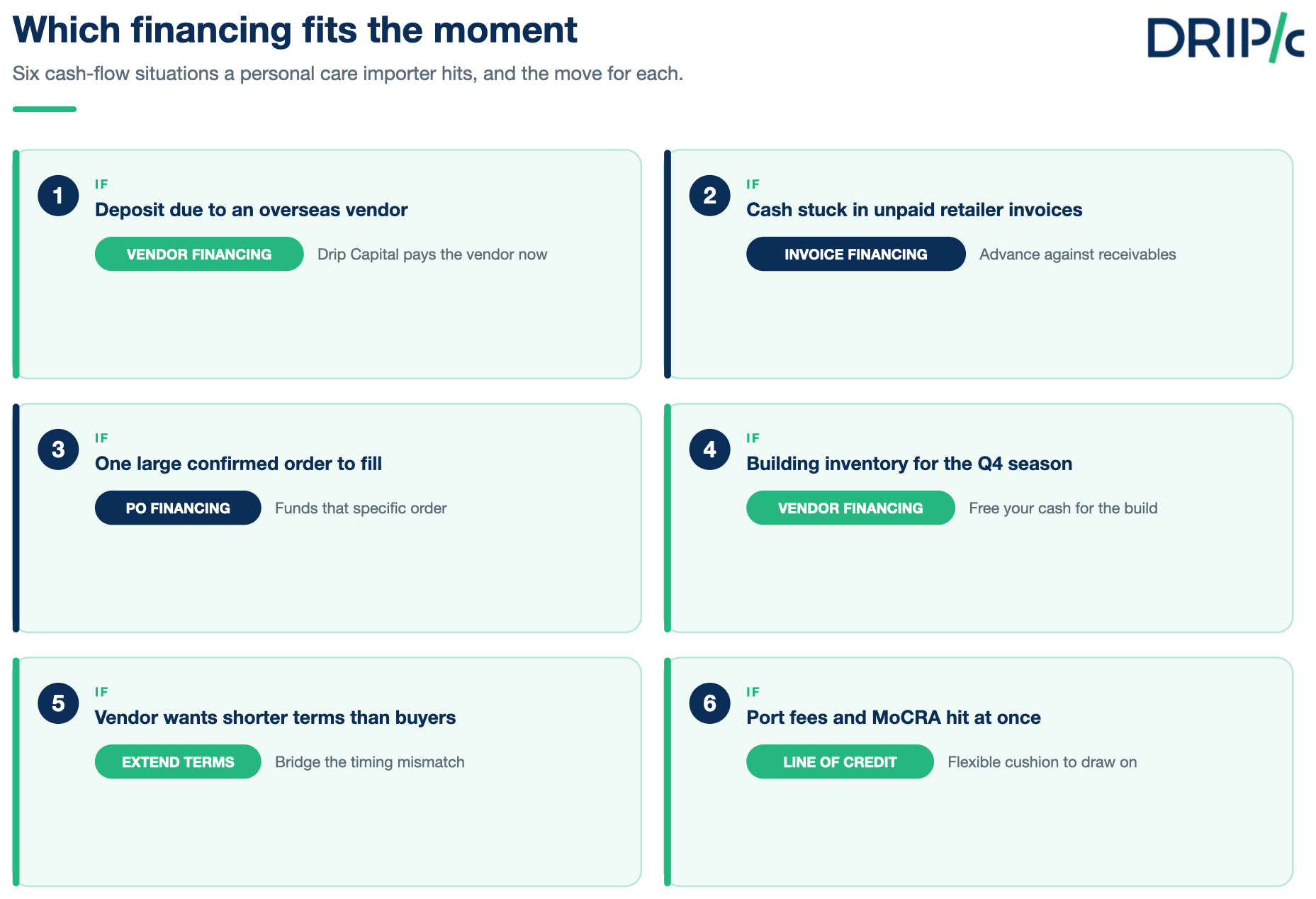
When those are not enough, financing bridges the gap directly. Invoice financing advances cash against what your buyers owe. Purchase order financing funds a confirmed order. And options that let you extend your vendor payment terms keep vendors paid on time while you hold onto cash longer.

How Drip Capital Helps Personal Care Importers
Drip Capital pays your overseas vendors directly through Vendor Financing, then gives you an agreed term to repay once your goods have sold. Your vendors see on-time payment, and your cash stays free to cover MoCRA compliance, port fees, and the next season's build.
Consider a Fairfield, New Jersey personal care and fragrance importer that Drip Capital has worked with since 2022. By financing more than 280 shipments, it has kept its overseas vendors paid on schedule through every peak season, and its annual sales grew from roughly $8 million to $9.2 million over that stretch. The financing moved in step with the goods, so a busy port and a deposit-heavy supply chain never became a cash wall.
Frequently Asked Questions
Why do cosmetics importers face such long cash cycles?
Overseas vendors want deposits and pre-shipment payment, the ocean leg adds weeks, and retail buyers pay on 60 to 90 day terms. Cash can sit tied in one order for four to six months, which strains a growing brand.
Does MoCRA affect importers or only manufacturers?
It affects importers too. Responsible parties must register facilities and list products with the FDA, and the cost and time of compliance fall before the product can generate revenue.
What financing fits a personal care importer best?
It depends on where the gap sits. Vendor financing helps when you need to pay overseas vendors before you sell, invoice financing helps when cash is stuck in unpaid buyer invoices, and purchase order financing funds a specific large order.
How does financing help with seasonal demand?
It lets you build inventory for a peak season without draining cash in the quiet months beforehand. You pay vendors on time now and repay once the season's sales come in.