
What Is a Pro Forma Invoice?
A pro forma invoice is a preliminary document issued by a seller to a buyer before goods are shipped or a sale is finalized. It looks like an invoice. It is not one.
More precisely: a pro forma invoice is a formal quotation in invoice format. It states what goods will be sold, at what price, under what terms, and when delivery is expected. According to the International Trade Administration, it is the preferred method of quoting in international trade - good practice to include with any international quotation regardless of whether one has been requested.
What a pro forma invoice is not: a demand for payment, a customs clearance document, or a substitute for a commercial invoice. Those distinctions matter - confusing them is one of the most common documentation errors in cross-border trade.
Pro Forma Invoice vs Commercial Invoice: What Is the Difference?
The two documents look nearly identical and serve fundamentally different purposes.

A pro forma invoice is issued before shipment. It is a binding quotation - an agreement on terms, not a record of a completed transaction. No goods have moved. No payment is due.
A commercial invoice is issued at the time of shipment. It is the final legal record of the transaction: what was actually shipped, at what price, under what terms. This is the document CBP requires for import clearance. It triggers payment and determines duty assessment.
The simplest way to remember the difference: a pro forma invoice is what you are planning to do. A commercial invoice is what you did.
When Do You Need a Pro Forma Invoice?
A pro forma invoice is needed any time a buyer requires a formal, detailed quotation before a transaction is confirmed. In international trade, this is more common than most sellers expect.
Banks require a pro forma invoice to structure a letter of credit correctly. Import license applications are based on it. Buyers arranging trade financing use it to show their lender what the transaction looks like. Pre-shipment inspections are arranged against it. And on any first-time international order, issuing one is simply good practice - even when nobody has asked.

What Fields Should a Pro Forma Invoice Include?
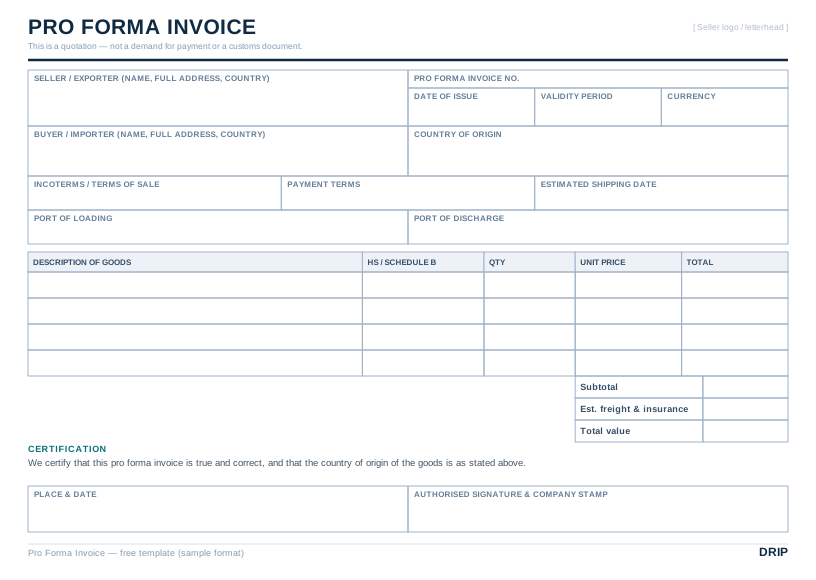
Unlike the commercial invoice, there is no single regulatory framework specifying mandatory fields for a pro forma invoice. The International Trade Administration provides a widely referenced standard of 15 recommended items, listed below alongside additional fields that best practice calls for.

| Field | Required | Notes |
|---|---|---|
| "Pro Forma Invoice" label | Yes | Must be clearly marked to avoid confusion with a commercial invoice. |
| Seller name and address | Yes | Full legal name and address of the exporting company. |
| Buyer name and address | Yes | Full name and address of the importing company. |
| Pro forma invoice number | Yes | Unique reference for tracking and [letter of credit](https://www.dripcapital.com/en-us/resources/blog/back-to-back-letter-of-credit-lc) purposes. |
| Date of issue | Yes | The date the pro forma is prepared. |
| Validity period | Yes | How long quoted prices and terms remain valid. |
| Detailed goods description | Yes | Specific name, grade, quality, marks - same standard as a commercial invoice. |
| HS / Schedule B code | Yes | 6-digit Harmonized System code for each line item. |
| Quantity | Yes | In the applicable unit of measure. |
| Unit price | Yes | Per unit, in the agreed currency. |
| Total value | Yes | Line item totals and overall total. |
| Currency | Yes | State the currency explicitly - do not rely on a symbol alone. |
| Country of origin | Yes | Where goods are manufactured, not where they ship from. |
| Incoterms / terms of sale | Yes | Which party bears which costs and risks (FOB, CIF, DAP, etc.). |
| Payment terms | Yes | How and when payment is expected once the commercial invoice is issued. |
| Estimated shipping date | Yes | Important for LC and import license timelines. |
| Port of loading and discharge | Recommended | Specific ports for origin and destination. |
| Estimated freight and insurance | Recommended | Helps buyer calculate total landed cost. |
| Certification statement | Yes | Certifying the pro forma is true and correct. |
| Country of origin declaration | Yes | A separate statement declaring the country of origin of the goods. |
Pro Forma Invoice Template (Free Download)
Here is a free, blank pro forma invoice template containing every field listed above. Download it, fill in your transaction details, and send it as your formal quotation. Download the pro forma invoice template
Little-Known Facts About Pro Forma Invoices
CBP can accept a pro forma invoice in place of a commercial invoice - but only in limited circumstances. Per 19 CFR § 141.85, CBP may allow a pro forma invoice when the commercial invoice cannot be produced at time of entry, provided the importer files a bond and produces the commercial invoice within 120 days. This is an exception, not standard practice.
The validity period is legally significant. A pro forma invoice is a binding quotation for the period it states. If a buyer opens a letter of credit against it and terms change after the validity period expires, the LC may need to be amended at the buyer's cost. Always state a realistic window and flag any changes in writing.
Currency exposure is the pro forma's hidden risk. Prices are agreed before shipment. If the transaction is denominated in a foreign currency, exchange rate movements between the pro forma invoice date and actual payment can alter the effective value of the deal. Many experienced exporters quote in USD to reduce this exposure on high-value transactions.
It must include two specific certifications per ITA guidance. Per ITA standards, every pro forma invoice should include: (1) a statement certifying the document is true and correct, and (2) a separate declaration of the country of origin. Both are commonly omitted on internally generated pro formas.
A pro forma invoice is part of the paper trail that constitutes the sales contract. In the absence of a formally signed sales agreement, the pro forma invoice and commercial invoice together form the contractual record of what was agreed and what was delivered. Courts and arbitration bodies in international trade disputes routinely reference both.
Common Mistakes to Avoid
Not labelling it clearly. A pro forma invoice that is not explicitly marked as such can be confused with a commercial invoice by buyers, banks, and customs authorities. The words "Pro Forma Invoice" must appear prominently at the top.
Omitting the validity period. Without a stated validity period, quoted prices have no defined expiry. This creates ambiguity if costs change before the order is confirmed and can expose the seller to honoring a price that is no longer viable.
Using imprecise goods descriptions. The goods description on a pro forma invoice often carries directly into the letter of credit and eventually the commercial invoice. Vague descriptions at the pro forma stage create downstream discrepancies that delay LC payment.
Quoting estimated freight without flagging it as an estimate. Buyers use the pro forma invoice to calculate total landed cost and plan financing. Significant differences between pro forma and commercial invoice cost figures can create disputes or financing shortfalls. Mark all estimates explicitly.
Issuing a commercial invoice without revisiting the pro forma terms. If prices, quantities, or terms have changed between the pro forma and shipment, the commercial invoice must reflect the final agreed figures. Document any changes in writing before the shipment moves.
Best Practices for Preparing a Pro Forma Invoice
Issue it proactively, even when not asked. The ITA recommends including a pro forma invoice with any international quotation. It demonstrates professionalism and gives both parties a shared reference document before the transaction moves forward.
Align it precisely with what the commercial invoice will say. Letters of credit are issued against pro forma invoice terms - discrepancies between the two documents are a leading cause of LC payment delays.
State the Incoterms version. Always specify which version of the Incoterms rules applies (Incoterms 2020 is the current standard). "FOB" means different things under different versions - specifying the version eliminates ambiguity.
Use a consistent numbering system. Reference the pro forma number on all subsequent documents related to the same transaction: the commercial invoice, the packing list, the bill of lading. A consistent reference trail makes dispute resolution significantly easier.
Keep a copy on file. Retain copies of all pro forma invoices alongside corresponding commercial invoices and shipping documents. In any LC dispute or customs inquiry, producing the full document trail from pro forma to delivery is essential.
At Drip Capital, we work with small and mid-size businesses across the United States engaged in cross-border trade: importing goods, managing supplier relationships, and navigating the documentation and cash flow realities that come with it. If you want to learn more about how Drip Capital supports businesses like yours with vendor financing and working capital solutions built for cross-border trade, visit us at dripcapital.com.
Frequently Asked Questions
What is a pro forma invoice?
A pro forma invoice is a preliminary document issued by a seller to a buyer before goods are shipped. It is a formal quotation in invoice format - stating the goods, quantities, prices, and terms of a proposed transaction. It is not a demand for payment and is not used for customs clearance.
Is a pro forma invoice legally binding?
A pro forma invoice is a binding quotation for the period it states. If a buyer opens a letter of credit against it, those terms are effectively committed. It is not, however, a final legal record of a completed transaction - that role belongs to the commercial invoice.
What is the difference between a pro forma invoice and a commercial invoice?
A pro forma invoice is issued before shipment as a formal quotation. A commercial invoice is issued at time of shipment as the final legal record of the transaction, required by CBP for customs clearance. The pro forma does not trigger payment. The commercial invoice does.
Can a pro forma invoice be used for customs clearance?
In limited circumstances, CBP may accept a pro forma invoice when the commercial invoice cannot be produced at time of entry - provided the importer posts a bond and produces the commercial invoice within 120 days. Always issue a separate commercial invoice at time of shipment.
How long is a pro forma invoice valid?
The validity period is set by the seller and must be stated explicitly on the document. Common windows are 30, 60, or 90 days depending on price volatility and lead times. Once expired, the quoted prices and terms are no longer binding on the seller.
Does a pro forma invoice need to be signed?
Yes. The ITA recommends that a pro forma invoice include a signed certification statement from the seller or their authorized agent. Many banks also require a signed pro forma invoice when processing letter of credit applications.
What is the difference between a pro forma invoice and a purchase order?
A pro forma invoice is issued by the seller - it is the seller's formal quotation of what they will supply and at what price. A purchase order is issued by the buyer - it is the buyer's formal acceptance of those terms and instruction to proceed. Together they form the contractual paper trail of the transaction in the absence of a signed sales contract.
Should I issue a new pro forma invoice if prices change before shipment?
Yes. If any material terms have changed between the pro forma and shipment, issue a revised pro forma invoice and notify the buyer in writing. If a letter of credit has already been opened against the original terms, the LC will need to be amended before the commercial invoice can be presented for payment.