
Equipment Financing helps businesses buy machinery, vehicles, and other equipment through scheduled payments. Banks, specialized finance providers, and equipment dealers offer different ways to fund a purchase. Choosing among Equipment Financing Companies starts with the machine you need, the amount you can contribute, and the repayment terms your business can support.
This guide explains which options to investigate and how to compare written offers. If you are still deciding which kind of funding suits the purchase, start with our Equipment Financing vs. Working Capital guide.
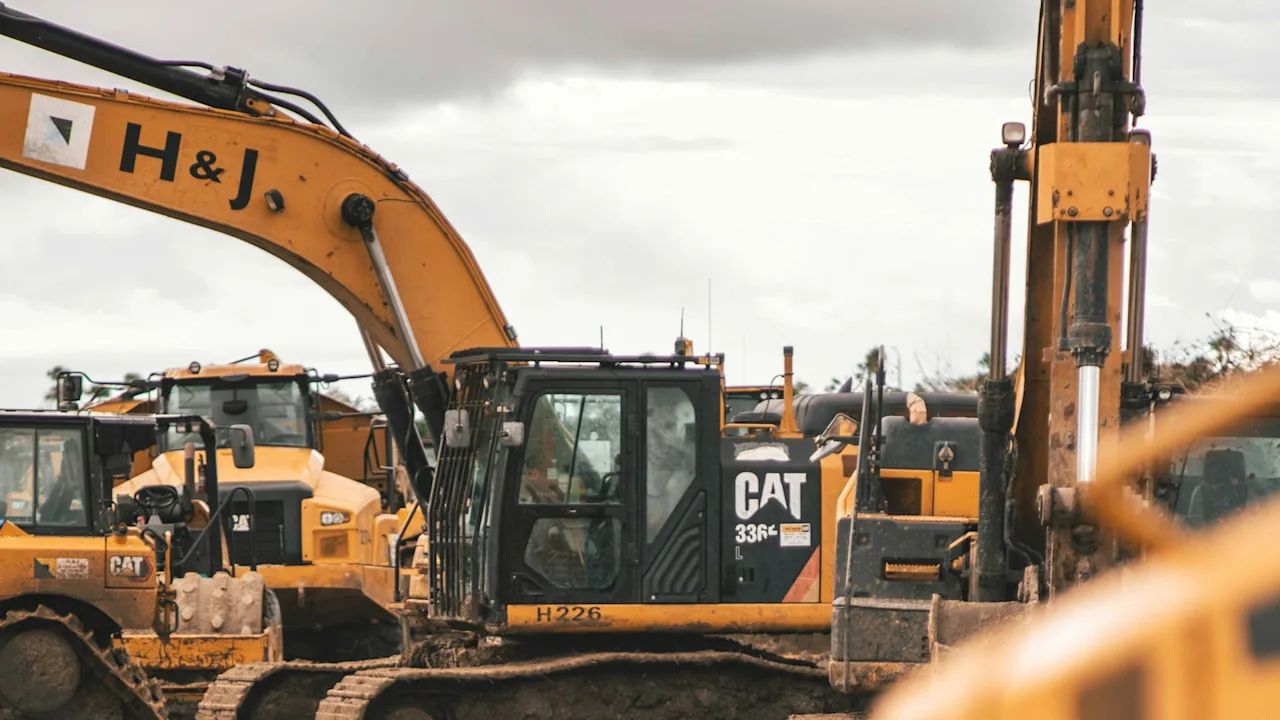
Photo by Jason Jarrach on Unsplash.
Start With a Complete Equipment Quote
Ask the vendor for the model, condition, delivery schedule, warranty, and itemized purchase price. Add freight, installation, taxes, training, and any site preparation. Then identify which costs the financing offer includes.
For Heavy Equipment Financing, add operating hours, service records, inspection results, and expected maintenance. A used excavator with an attractive price can still require repairs before its first job. Give every prospective provider the same purchase details so their proposals cover the same project.
By the Numbers
These are program parameters. Your approved amount and eligible costs depend on the project and underwriting.
Which Equipment Financing Options Should You Compare?
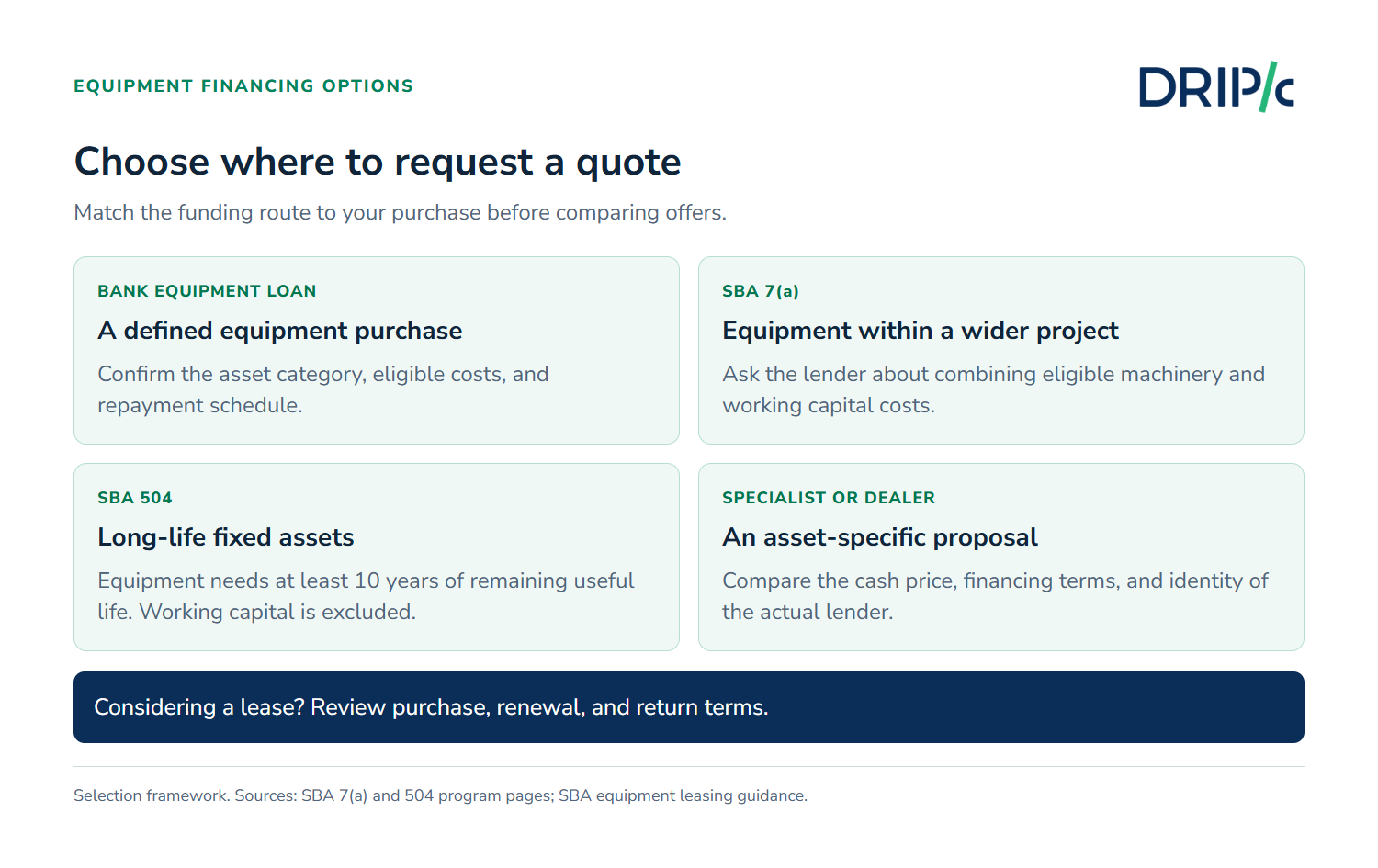
Bank Equipment Loans
An existing banking relationship is a useful place to request a proposal. Ask whether the bank finances your equipment category, accepts used assets, and can meet the vendor's deadline.
Bank of America offers Equipment Loans and leases for industrial equipment, specialized machinery, and certain commercial vehicles. Its equipment page also lists an Equipment Line of Credit. Request the specific ownership and repayment terms for the structure being proposed.
U.S. Bank publishes an application-only process for transactions up to $250,000 for existing customers. Its page describes terms from 24 to 60 months and the ability to include certain additional costs, such as installation, tax, and freight, subject to its stated limits and approval.
These examples provide a starting point for your shortlist. Published features give you questions to ask; the written offer determines what applies to your purchase.
SBA 7(a) Loans
The SBA 7(a) program can accommodate machinery purchases and installation alongside other eligible business purposes, including working capital. That makes it worth investigating when equipment is one part of a wider expansion budget.
You apply through a participating lender. Confirm eligibility, required documents, your contribution, and the expected closing timetable before committing to a delivery date.
SBA 504 Financing
The SBA 504 program supports major fixed assets through Certified Development Companies working with lenders. Its equipment eligibility rule makes remaining useful life a practical screening question, particularly for older machinery.
Working capital and inventory are excluded uses. Build a separate funding plan for those costs and ask the CDC which project expenses qualify.
Specialized Providers and Dealer Programs
Specialized Equipment Financing Companies and dealer-arranged programs are additional places to request quotes. Ask about experience with your asset category, inspection requirements, and who will actually provide and service the financing.
For a dealer offer, request both the cash purchase price and the financed price. Also ask whether promotional financing changes a discount, deposit, or other purchase term. Compare the whole transaction using the same equipment specification.
Equipment Leasing
A lease gives your business use of equipment under an agreement with its owner. Review the end-of-term choices carefully: return, renewal, or purchase may carry different obligations.
The SBA's equipment leasing guidance highlights the distinction between fair-market-value and nominal purchase-option leases. Ask how a buyout is calculated, when notice is due, and who pays return freight. Have your accountant review the tax treatment of the actual contract.
Compare Equipment Financing Rates on Equal Terms
Equipment Financing Rates are only useful when you know the amount financed, payment schedule, and charges included. Ask whether the quoted figure is an annual interest rate, APR, or another pricing measure, and request the total scheduled payments in dollars.
Use one comparison sheet for all offers: upfront cash, financed amount, fees, number of payments, monthly payment, final payment, and ownership at the end. Include any mandatory buyout when comparing offers that leave you owning the same asset.
Put a Lower Monthly Payment in Context
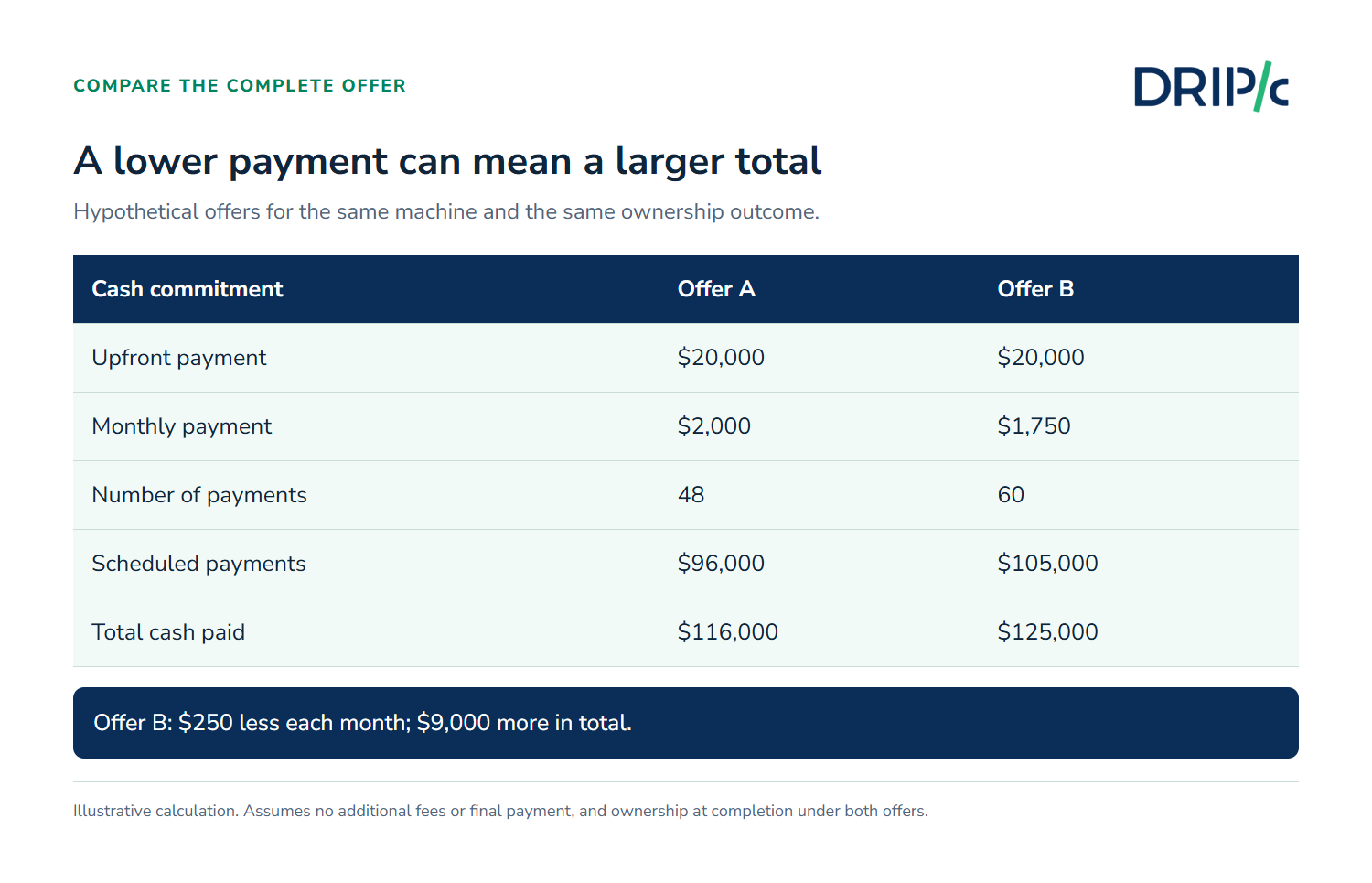
Consider two hypothetical offers for the same machine. Both require $20,000 upfront. Offer A then requires 48 payments of $2,000; Offer B requires 60 payments of $1,750. Assume both transfer ownership with no final payment or additional fees.
Offer A totals $116,000. Offer B totals $125,000. The second offer reduces the monthly payment by $250 and increases total cash paid by $9,000. Your decision should account for both effects and the operating cash available each month.
Read the Exit and Collateral Terms
Request a written explanation of early payoff charges, collateral, default provisions, and any restrictions on selling or relocating the equipment. For leases, include renewal and return requirements.
Our guide to business financing options provides broader context if the proposals lead you to reconsider the funding structure.
Equipment Financing for Startups
When seeking Equipment Financing for Startups, ask about the provider's minimum operating history before submitting a full application. Prepare a business plan, realistic cash-flow projections, equipment quote, and evidence supporting your expected sales.
Find out what contribution and documentation the provider needs. Avoid building a purchase plan around an advertised maximum or assuming that the equipment alone establishes eligibility. A smaller initial purchase or staged rollout may make the repayment obligation easier to support.
Check the Cash Left After Closing
Even the Best Equipment Financing proposal for a machine must fit the rest of the business. Map the deposit and initial payments against payroll, rent, inventory purchases, and customer collections. Our working capital guide explains those operating needs.
Then test a delayed installation or slower first month of output. Identify the existing cash source that would cover payments during that period.
Tax planning deserves its own review. Our bonus depreciation guide covers the qualification questions to discuss with your tax adviser; keep expected tax savings separate from cash already available for a deposit.
Where Drip Capital Fits
Drip Capital can help eligible businesses address operating needs around an equipment project. Vendor Financing pays vendors directly, with repayment up to 90 days. A Line of Credit provides access to funds within an approved limit; each draw is repaid over six monthly installments.
Eligibility includes at least two years in business and $2M+ in annual revenue. Confirm the intended use and applicable terms with the team, then assess whether the repayment schedule fits your cash flow alongside any equipment-specific financing.
Frequently Asked Questions
How Do I Choose the Best Equipment Financing Company?
Compare Equipment Financing Companies using the same equipment quote and ownership objective. Review eligibility, upfront cash, total payments, collateral, and the funding timetable before choosing an offer.
Can I Finance Used Equipment?
Ask each provider about its rules for asset age, condition, remaining useful life, and valuation. Supply an inspection and service history when available so the offer reflects the specific machine.
What Determines Equipment Financing Rates?
Equipment Financing Rates depend on the provider's assessment and the proposed transaction, including the asset, repayment term, and business finances. Request a complete written quote that identifies fees and any final payment.
Is Leasing Better Than Buying?
The answer depends on how long you expect to use the equipment and whether you want ownership. Compare costs across the same period and include purchase options, maintenance obligations, and return requirements.