
Buying equipment often starts with a financing question: what are your options? Equipment Financing helps businesses purchase machinery and other business equipment. Working Capital Financing covers operating expenses and can also support certain equipment purchases. This guide explains how these options work and what to consider before choosing one.
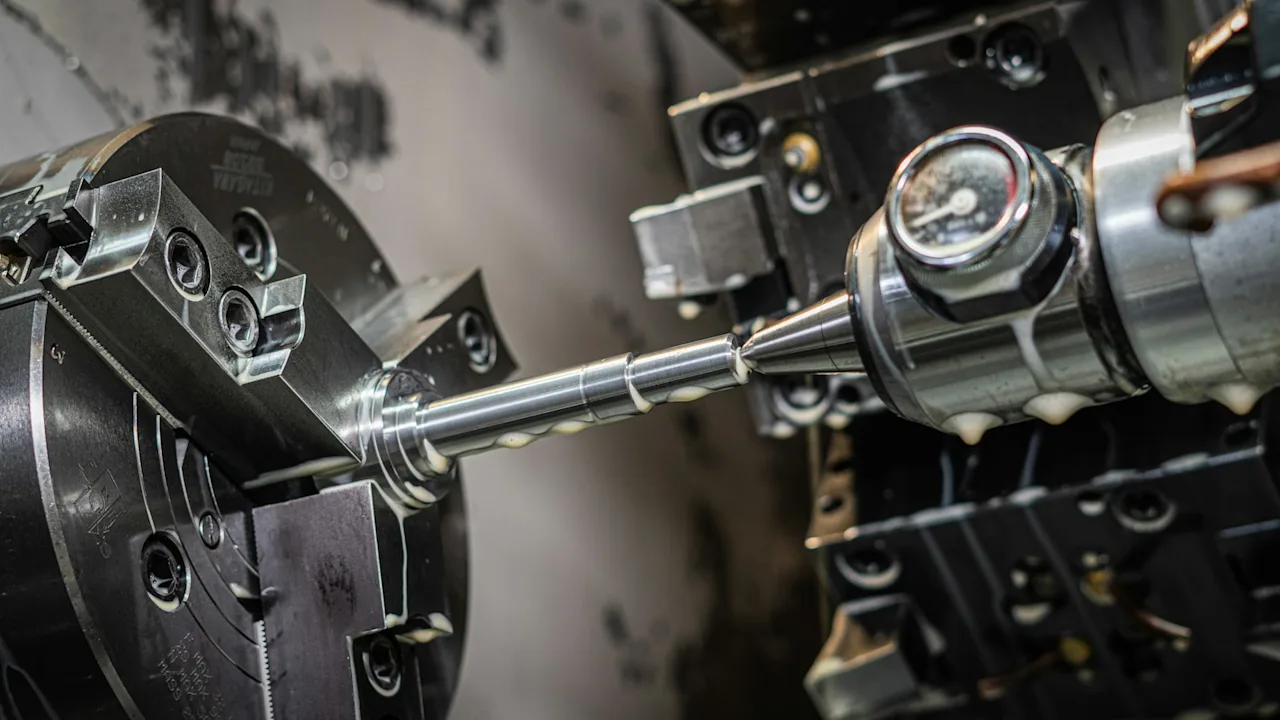
Illustrative machinery photo by Sven Daniel on Unsplash.
What Are You Buying the Equipment For?
Equipment Used in Your Business
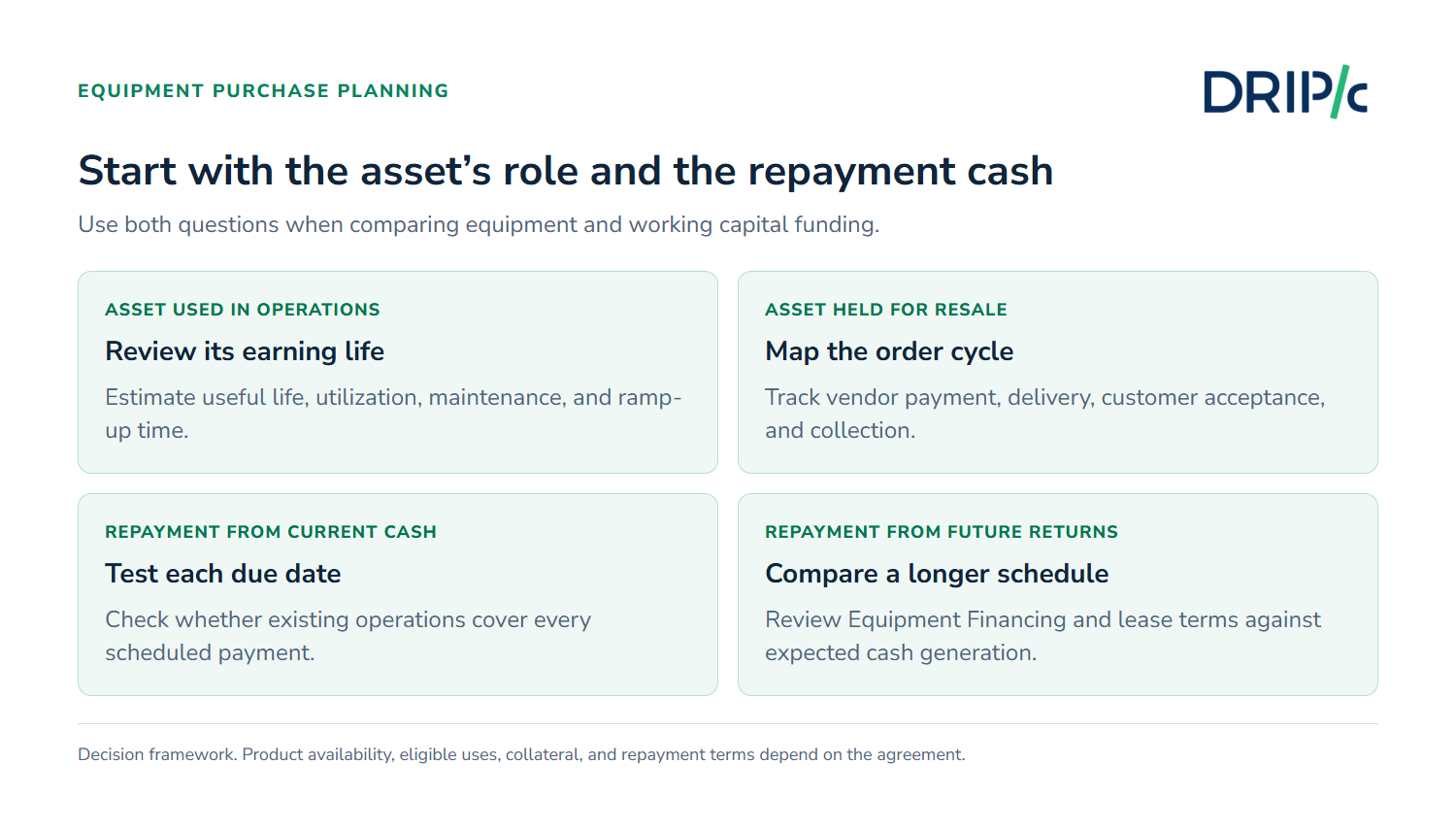
A forklift used to move stock or a packaging machine used to prepare orders is a long-term operating asset, typically classified as property, plant and equipment (PP&E). Its value comes from the work it supports over time. Review useful life, maintenance needs, expected utilization, and when the purchase begins generating cash savings or additional collections.
That makes repayment length a central part of the decision. A large purchase funded over a short period can require existing operations to cover most of the payments before the new asset contributes much.
Machinery Purchased for Resale
A machinery distributor purchasing a machine to sell to a customer faces an inventory cycle. The relevant milestones are vendor payment, delivery, customer acceptance, and collection. The machine's physical durability does not establish how long the distributor needs funding.
This is the practical Difference Between Inventory Financing and Equipment Financing: examine the role the asset plays in your business. Our Inventory Financing guide covers stock funding in more detail.
How the Financing Structures Differ
Equipment Loans and Leases
Equipment loans finance all or part of the cost of specified assets and typically spread repayment over a defined term. Leasing provides access under an agreement with its own ownership, return, renewal, or purchase provisions. U.S. Bank's equipment guidance describes both routes.
Ask which equipment qualifies, what collateral is required, and whether freight or installation can be included. For a lease, price the end-of-term choices as part of the decision. A monthly payment alone leaves those differences unresolved.
Working Capital Loans and Revolving Facilities
A Working Capital Loan generally supports operating needs, with permitted uses and repayment terms set by the agreement. A revolving facility can provide repeated access within its terms and available limit. The Working Capital Loan lifecycle explains application and repayment mechanics.
For equipment purchases, confirm permitted use explicitly. Then identify the cash that will repay the draw or loan. Existing customer collections may provide that cash even when the new machine takes longer to generate a return.
SBA Programs Illustrate the Difference
The SBA 7(a) program permits both working capital and machinery purchases and installation, including loans serving multiple purposes. Eligibility and lender underwriting still apply.
The SBA 504 program can finance qualifying long-term machinery and equipment, but its proceeds cannot fund working capital or inventory. Businesses considering it need a separate plan for those operating needs.
Compare the Repayment Calendar With the Cash Calendar
Separate Useful Life From Near-Term Cash
A machine expected to operate for several years may still be affordable with short-term funding if the business has a dependable, sufficient near-term repayment source. Conversely, a long useful life cannot make a compressed payment schedule affordable by itself.
In an Equipment Financing vs. Working Capital Loan comparison, write down the first payment date, every subsequent payment, and the final maturity. Next to each, record the cash expected from existing operations and the new equipment. Keep uncertain future benefits visibly separate.
Include Delivery and Installation
Imported equipment can require cash before it is operating. Budget the vendor deposit, balance payment, freight, applicable duties, site preparation, installation, testing, and training. Ask which costs the financing covers and which must come from cash reserves.
The IRS explains that asset cost basis generally includes items such as freight, installation, and testing. Tax treatment and financing eligibility are separate questions. Confirm the tax details with your adviser and the funded costs with the provider.
A Worked Example: The Purchase Is Larger Than the Invoice
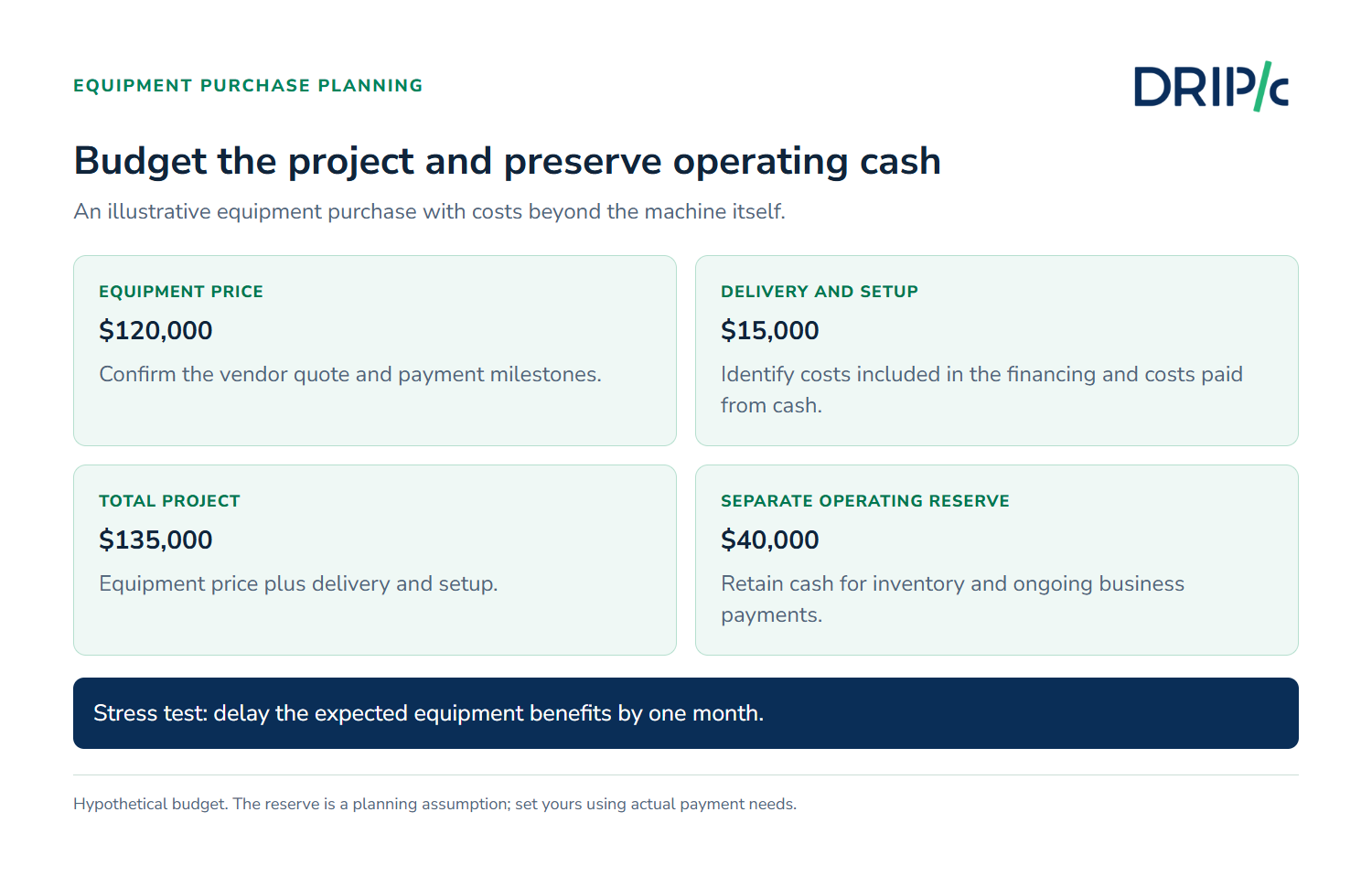
Assume a wholesaler plans an illustrative $120,000 equipment purchase, with $15,000 for delivery and setup. Management also wants to retain $40,000 for inventory and operating payments. The project therefore calls for $135,000, alongside a separate $40,000 operating reserve.
If it funds the entire project from $175,000 in available cash, $40,000 remains. If it finances the project, more cash remains initially, but future payments reduce that flexibility. The reserve must be tested against actual payment dates in both cases.
Compare two hypothetical principal-only schedules for the $120,000 equipment price: $20,000 per month over six months, or $2,000 per month over 60 months. Actual financing includes interest, fees, and contract-specific terms. The example isolates repayment pace; it is not a quote, a recommended term, or a total-cost comparison.
Stress Test the Ramp-Up
Assume installation takes a month longer than planned, then move the expected equipment-related collections accordingly. Keep scheduled financing payments unchanged unless the agreement expressly allows an adjustment. Check whether existing operations can cover the difference without breaching the operating reserve.
For cross-border purchases, the industrial machinery import guide discusses the shipment funding gap. Here, the decision is whether the full purchase and repayment plan fits your business.
By the Numbers: Funding Has Competing Uses
Respondents could select multiple reasons. These findings describe the 2025 survey's small employer firms and are not equipment-purchase statistics. They show why growth plans and everyday cash requirements belong in the same funding discussion.
Compare Offers Beyond the Monthly Payment
Total Cash Outlay and Flexibility
Record the down payment, net amount funded, all scheduled payments, fees, and any final purchase or balloon payment. For a lease, include the cost of the end-of-term option you expect to choose. Check what happens if you sell, replace, or repay early.
A longer schedule reduces the principal allocated to each period, but pricing and duration also affect total cost. Evaluate both affordability and total outlay using the actual written offers.
Collateral and Remaining Borrowing Capacity
Ask what assets secure the agreement and whether existing financing limits another lender's rights. Also examine how much capacity remains available for inventory, freight, and payroll after the equipment purchase. Available credit can become essential during a delayed customer collection.
For the broader distinction between revolving access and a fixed advance, see the Line of Credit vs. Bank Loan comparison.
Where Drip Capital Fits
Drip Capital's Vendor Financing pays vendors directly, with repayment up to 90 days. For an eligible equipment vendor payment, evaluate that short repayment window against existing business cash flow and confirm the proposed transaction's eligibility. A machine's long useful life does not extend the repayment deadline.
Drip Capital's Line of Credit supports business cash needs through draws, subject to the facility's terms and available credit. Each draw is repaid over six monthly installments. Review permitted use, fees, and scheduled payments before using a draw for equipment or associated operating costs.
If the purchase depends on several years of future equipment earnings to repay its cost, compare longer-term Equipment Financing and leasing offers. The financing structure should fit the repayment source the business can support.
Frequently Asked Questions
Can a Working Capital Loan Pay for Equipment?
Some agreements allow equipment purchases, while others restrict uses. Confirm eligibility in writing and test the repayment schedule against available cash before committing.
How Should I Compare Equipment Financing vs. Inventory Financing?
For Equipment Financing vs. Inventory Financing, start with whether the asset supports operations or is held for sale. A machine used in your warehouse and the same machine bought for resale can create different funding needs.
What Matters Most in a Working Capital vs. Equipment Loan Decision?
A Working Capital vs. Equipment Loan decision depends on permitted use, repayment timing, total cost, and remaining operating cash. Compare written offers with the same purchase budget and slower-collection scenario.
Does a Tax Deduction Make Short-Term Financing Affordable?
A potential deduction does not change the contractual payment dates. Assess tax treatment separately with your adviser and build the repayment plan around cash the business expects to have available.