
Photo: Alexandre Debiève / Unsplash. Illustrative image.
A cheap carton of electronics is only a good purchase if you can sell what is inside it. The exact model, product condition, warranty, and right to sell through your chosen channel can matter as much as the price.
When buying wholesale electronics, begin with the type of business you run. A computer reseller, an electronics repair shop, and a manufacturer buying components need different sources. This shortlist compares published capabilities, checked November 5, 2026. It does not rank prices, guarantee availability, or certify every product a company lists.
What kind of electronics do you need?
Finished products for resale
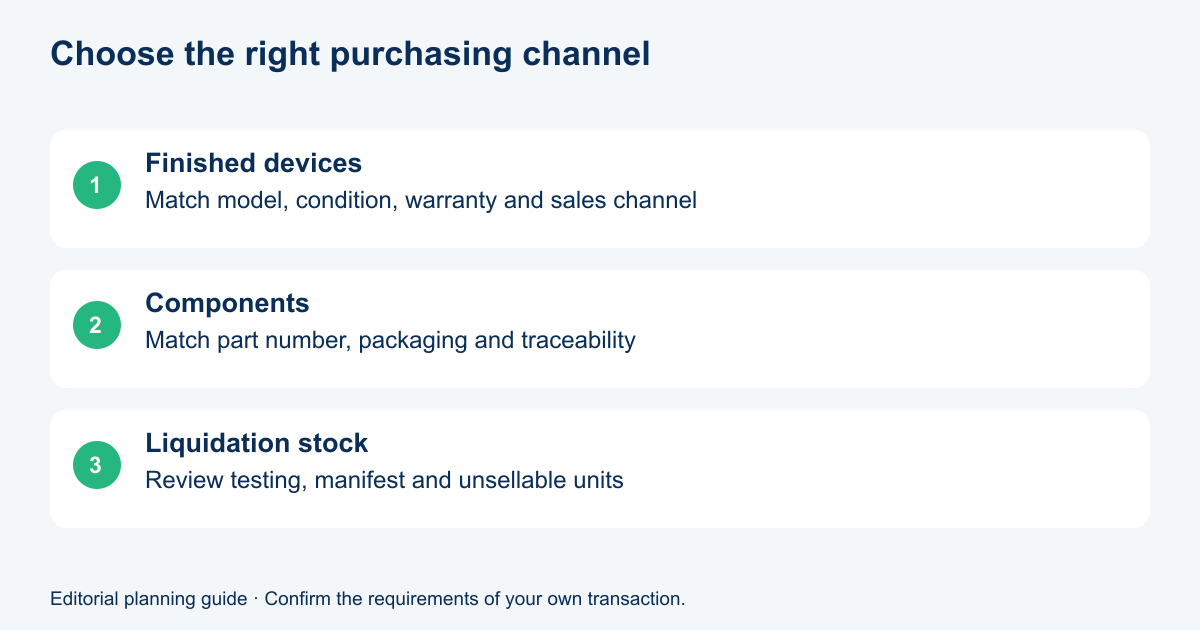
These include computers, displays, networking equipment, accessories, and consumer devices. Check the exact model and region, included accessories, packaging condition, and warranty arrangements. Similar-looking product names can conceal different specifications.
Components for manufacturing or repair
Components require a different buying process. Part numbers, tolerances, operating specifications, packaging formats, and traceability matter. A distributor suited to sourcing semiconductors may have little relevance to a store buying televisions.
Refurbished or liquidation stock
Ask for a written condition definition, testing details, a manifest, and the rules for shortages and returns. A batch described as customer returns can contain items with very different resale values. Build an allowance for inspection and unsellable units before deciding whether the price works.
Five US electronics distributors to investigate
Ingram Micro: consumer technology and IT channels
Ingram Micro's consumer technology offering includes products and components across multiple brands. It is a relevant starting point for resellers looking at consumer technology alongside a broader IT operation.
Ask which brands your account can access and whether separate authorization applies. Confirm where stock ships from, the warranty route, and the documents provided with a purchase. A large catalog does not mean every item is available to every new account.
D&H Distributing: consumer electronics and business technology
D&H's US line card lists consumer-electronics and technology brands. Use the current line card to identify categories worth discussing, then verify the exact products and account requirements with the company.
For a small reseller, the useful questions are practical: what can you actually order, in what quantity, with which payment terms, and with what support when a customer returns an item? Avoid treating a brand logo as blanket authorization for your intended sales channel.
ScanSource: business technology distribution
ScanSource describes its business as technology distribution across hardware, software, connectivity, and cloud. It may suit businesses selling technology solutions where the equipment is part of a larger customer installation.
Review its buying and partner process against your business model. Ask about the relevant product line, reseller qualification, and technical support. Consumer resale and business-solution distribution can involve different expectations.
Mouser Electronics: electronic components
Mouser identifies itself as an authorized distributor of electronic components and industrial automation products. This is a different category from buying finished consumer devices by the pallet.
Its new-customer guidance says normally stocked products have no minimum order value, subject to factory ordering restrictions shown. Check the actual part listing and packaging quantity. A low order-value threshold does not guarantee that every component can be bought in a single unit.
DigiKey: components with a marketplace distinction
DigiKey's location guidance distinguishes its core inventory, stored and shipped from its US distribution center, from its Marketplace program involving other manufacturers and distributors.
Check who fulfills the exact item, where it ships from, and whose return terms apply. That distinction matters when you are comparing delivery timing or expecting several items to arrive together. Record the full part number and packaging format on the purchase order.
How to buy electronics wholesale
A search for electronics distributors in the USA produces many options. Reduce the list with a written purchasing brief: product category, brands, exact models, quantities, sales channels, required documents, and delivery destination. Include any customer deadlines or installation requirements.
Then ask each vendor to confirm the same details. Comparing a new US-market item with an open-box or different-region version gives you a price comparison with little commercial meaning.

Keep the first order manageable enough to inspect properly. A small initial saving can disappear if you have to replace units, resolve warranty disputes, or delay customer deliveries.
Check authorization and traceability
Verify manufacturer authorization for the relevant product line where it matters. Request invoices and traceability information appropriate to the goods. For components, Mouser's quality guidance explains its authorized-channel sourcing approach; apply the same level of scrutiny to the source you choose.
Avoid blanket claims that every product from a recognizable distributor has identical terms. The exact item, seller, and transaction documents should support your decision.
Build the real purchase cost
Include unit price, shipping, tax treatment, testing, packaging, returns, and likely markdowns. For imported goods, add duties and clearance costs based on the actual product and entry. Electronics wholesale margins can change quickly when an old model remains in stock after a new version launches.
Review inventory turnover and your working-capital cycle together. Selling at a profit eventually does not ensure the cash arrives before the vendor payment is due.
By the numbers: test the stock before scaling
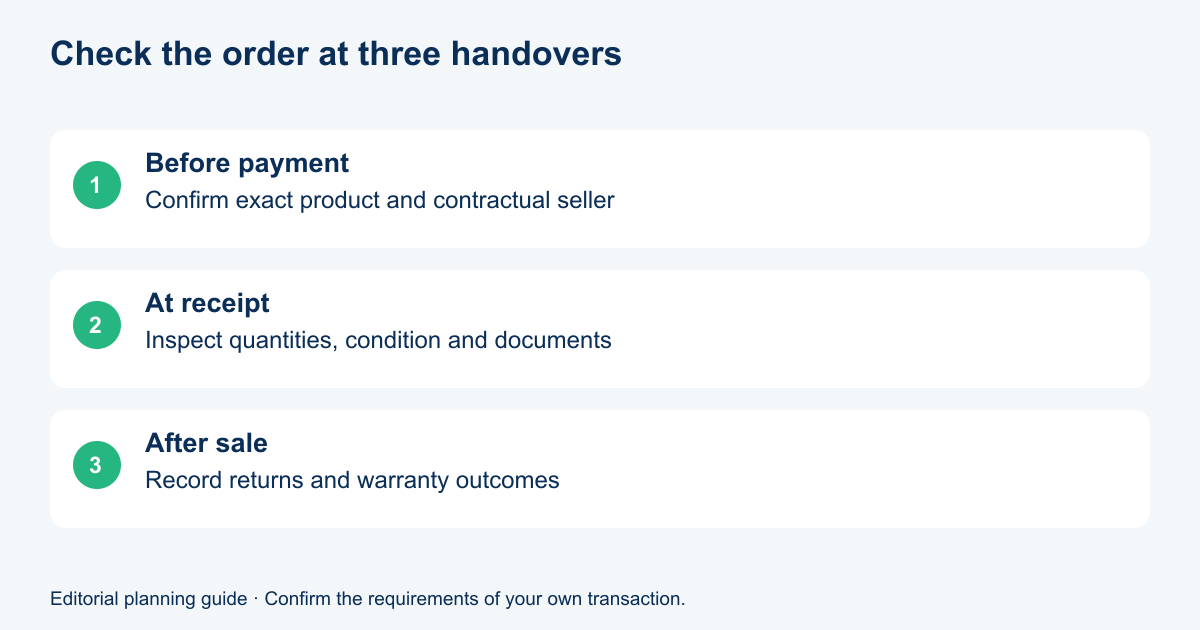
For your first order, document three checkpoints: the quoted specification, the goods received, and the customer's accepted product. This is an editorial purchasing checklist, not an industry defect-rate benchmark.
Put the agreement in writing
Specify condition, quantity, accepted substitutions, warranty handling, return windows, and responsibility for transit damage. Review vendor contracts and payment terms. If a large customer order drives the purchase, match those commitments to the inventory you need to fund.
Support vendor payments with Drip Capital
Drip Capital's Vendor Financing pays vendors directly and offers repayment terms of up to 90 days, subject to approval and terms. Assess the repayment date against realistic sales and collections. Financing an electronics purchase does not remove product, warranty, or obsolescence risk.
Frequently asked questions
Which wholesale electronics vendor is best?
The answer depends on whether you need finished devices, business technology, or components. Compare the exact products and terms you can obtain. The companies above are a research shortlist, not a price or quality ranking.
Can I buy wholesale electronics without a resale business?
Account requirements vary. Some distributors serve businesses and consumers, while others use reseller or partner onboarding. Confirm registration, tax-document, and channel requirements before applying.
Should I always choose the lowest unit price?
Compare the total cost of sale, including returns, warranty handling, and unsold inventory. A lower unit price may be attached to a different condition, model, quantity, or service arrangement.