
Purchase order financing helps businesses pay suppliers to fulfill confirmed orders. Instead of using their own working capital, businesses can rely on financing to keep orders moving without delays.
Understanding how purchase order financing works helps businesses decide if it’s the right fit for their cash flow needs.
The Business Situation Purchase Order Financing Solves
In many industries, suppliers require payment before producing or shipping goods. At the same time, customers often pay only after receiving the finished product. This timing difference creates a temporary funding gap for many businesses.
A business may have a confirmed order and a reliable buyer, yet still lack the immediate capital required to begin production. Purchase order financing addresses this situation by funding supplier payments so the order can be completed.
The financing is tied directly to a specific transaction rather than general borrowing.
The Purchase Order Financing Process
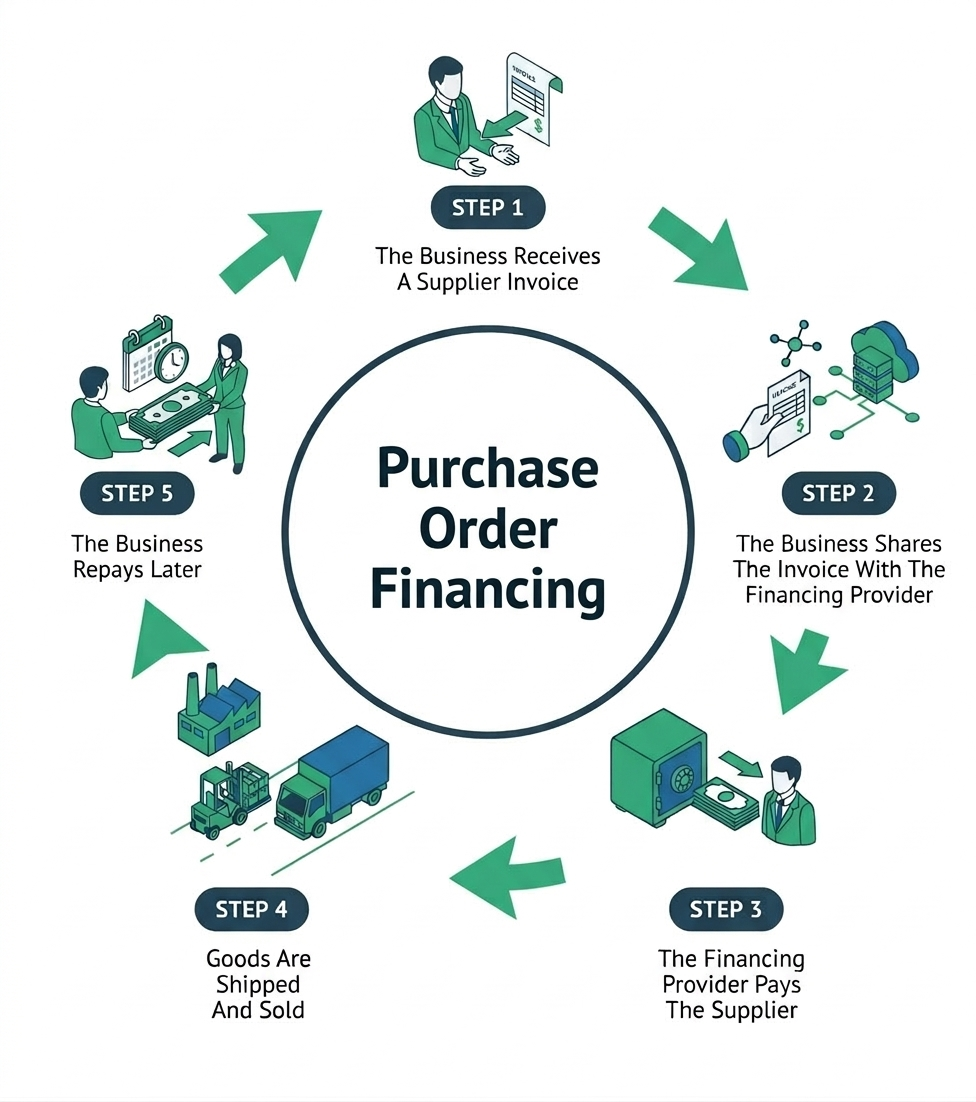
Most purchase ordering financing transactions follow a similar process.
1. The Business Receives A Supplier Invoice
The process begins when a business places an order with a supplier and receives an invoice that requires upfront payment.
This is common in global trade, where suppliers expect payment before shipping goods.
2. The Business Shares The Invoice With The Financing Provider
Instead of using its own working capital, the business submits the supplier invoice to a financing provider for funding it.
Unlike traditional lending, fintechs like Drip Capital’s primary evaluation focuses on the strength of the transaction itself. Typical considerations include:
- the reliability and creditworthiness of the buyer
- the supplier’s ability to produce and deliver the goods
- production and shipping timelines
Because repayment ultimately depends on the buyer completing the purchase, buyer credibility plays an important role in the assessment.
3. The Financing Provider Pays The Supplier
Once approved, the financing provider pays the supplier directly on behalf of the business.
This ensures:
- Suppliers get paid on time
- Goods are produced or shipped without delays
- The business doesn’t have to use its own cash upfront
Direct supplier payment reduces risk and keeps the production process moving without interruption.
4. Goods Are Shipped And Sold
The supplier processes and ships the goods to the business. The business can then sell the goods or fulfill downstream customer orders.
5. The Business Repays Later
The business repays the financing provider within an agreed period (typically up to 90 days). Purchasing order financing, in short, bridges the gap between paying suppliers upfront and getting paid later from customers, allowing businesses to grow without being constrained by working capital.
Example of a Purchase Order Financing Transaction
Consider a distributor that receives a $300,000 purchase order from a large retail chain.
The supplier requires $210,000 upfront to manufacture the goods. The distributor does not want to use internal capital to cover this payment.
Through purchase order financing, a financing provider pays the supplier the required amount so production can begin.
Through purchase order financing, a financing provider pays the supplier directly, allowing the distributor to fulfill the order without upfront cash.
After the goods are delivered, the retailer pays the financing provider directly, according to the agreed terms. Meanwhile, the distributor completes the order without using internal working capital.
Industries That Commonly Use Purchase Order Financing
Purchase order financing is particularly common in industries where fulfilling large orders requires significant upfront supplier payments.
Examples include:
- manufacturing
- wholesale distribution
- consumer products
- electronics and hardware
- perishable goods like seafood
Businesses operating in these sectors often experience rapid growth opportunities that require additional funding to scale production.
Why Businesses Use Purchase Order Financing
The main advantage of purchase order financing is that it enables companies to accept larger orders without tying up their internal liquidity.
Instead of declining opportunities due to limited working capital, businesses can use external funding to keep their supply chain moving.
This structure helps businesses:
- maintain supplier relationships through timely payments
- fulfill large customer orders confidently
- preserve internal capital for operations and growth
When structured properly, purchase order financing becomes a strategic tool for managing growth.
Key Considerations Before Using Purchase Order Financing
Purchase order financing works best when a business has confirmed customer orders but needs capital to pay suppliers and fulfill those orders.
It works best if your order terms are clear, your suppliers require advance payment, and your customers take time to pay after delivery.
If your cash is tied up but demand is growing, purchase order financing can help you take on larger orders without straining working capital.
Frequently Asked Questions
What is the purchase order financing process?
Purchase order financing is used when a business places an order with a supplier but needs funding to pay upfront. Instead of using its own working capital, the business shares the supplier invoice with a financing provider.
The financing provider pays the supplier directly on behalf of the business, ensuring the order moves forward without delay.
Once the goods are received and sold, the business repays the financing provider within the agreed credit period.
When should a business use purchase order financing?
Purchase order financing is used when businesses need to pay suppliers upfront but want to preserve working capital.
It is common in industries such as manufacturing, wholesale, consumer goods, and international trade, where suppliers require advance payment before shipping goods.
How long does purchase order financing take?
The approval timeline for purchase order financing varies depending on the financing provider and the complexity of the transaction. In many cases, once the purchase order and supplier details are verified, funding for supplier payments can be arranged within hours.
Is purchase order financing a loan?
Purchase order financing is different from a traditional loan. Instead of providing a lump sum of capital, the financing provider funds specific supplier payments related to a confirmed purchase order.
What are the requirements for purchase order financing?
Purchase order financing usually requires a confirmed purchase order from a creditworthy buyer and a reliable supplier capable of fulfilling the order.
Financing providers typically evaluate the reliability and creditworthiness of the buyer, the supplier’s ability to produce and deliver the goods, production and shipping timelines.
To understand the structure, benefits, and practical use cases in detail, visit our comprehensive Purchase Order Financing guide.