

Photo: Photo via Unsplash. Illustrative image.
The factory quote is only the beginning of an import order. Before the goods can become saleable stock, you need to settle product requirements, shipping responsibilities, customs treatment, and the cash needed along the way.
If you are figuring out how to import from China, work through those questions before paying a large deposit. The process below is designed for a US business buying commercial goods. Requirements vary by product and transaction, so use the checklist with your customs broker and any relevant product specialist.
Step one: define the product precisely
A description such as “plastic accessories” is too vague for a serious buying or compliance decision. Record materials, dimensions, intended use, model numbers, packaging, and any electrical or safety specifications. Ask for samples and an agreed specification sheet.
Different products can trigger different rules even when they look similar. A product intended for children, for example, can have requirements that do not apply to an adult-use item. Do this work before assuming the factory's existing documents cover your order.
Step two: establish who is responsible for the import
Decide which business will act as importer of record and which licensed customs broker, if any, will make the entry. CBP's guidance for new importers recommends understanding product requirements and consulting appropriate specialists before shipping.
A freight forwarder, seller, or marketplace may arrange part of the process. Ask exactly what that service includes and obtain the entry records. Importing from China to the USA creates obligations that cannot be understood from a “door-to-door” label alone.
Step three: verify the vendor and production plan
Confirm the legal contracting entity, factory location, bank beneficiary, production capacity, and experience with the product. Request references appropriate to the order. Independently verify changes to payment instructions through an established contact.
Agree on samples, inspection criteria, substitutions, defects, and who pays for rework. A passing sample should be tied to the specification for the production batch. Your vendor agreement should make that connection clear.
Step four: identify the tariff classification and origin
Work with your broker to determine the appropriate HTS classification from the actual product characteristics. Use the US tariff schedule as the official starting point. A code supplied by the factory is useful information to check, not a complete classification analysis.
Country of origin is a separate question from the country where you buy or ship the goods. Keep manufacturing and material information that supports the origin declaration. Routing a shipment through another country does not by itself establish a new origin.
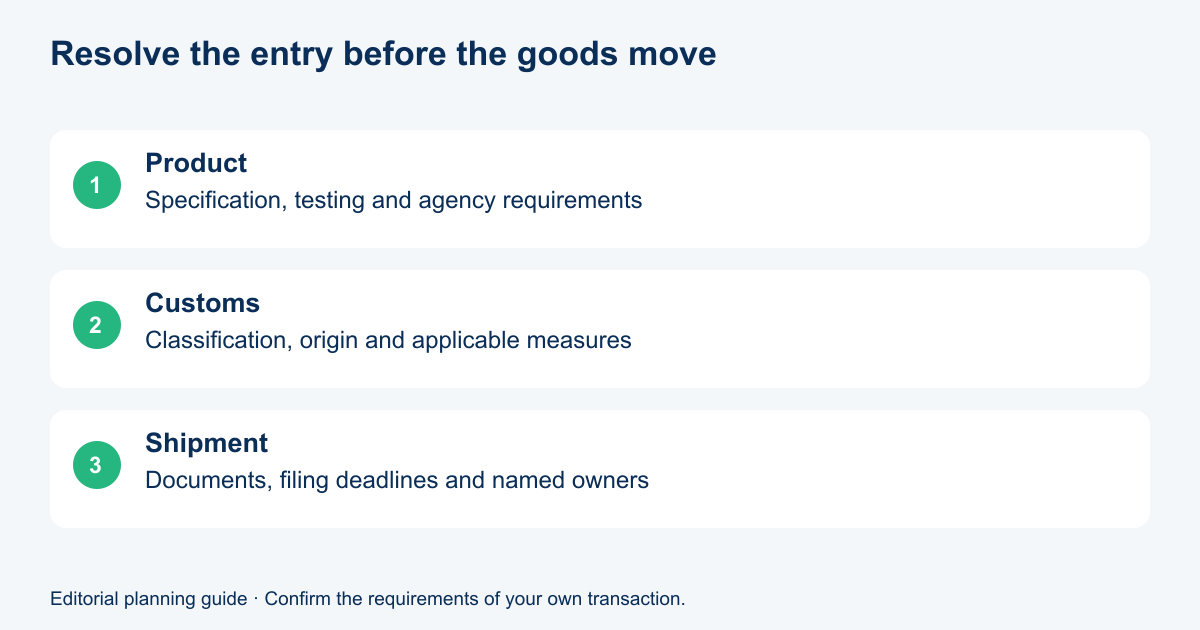
Step five: calculate the applicable duties and other charges
There is no single rate for US tariffs on China that accurately prices every product. The applicable amount can depend on classification, origin, entry date, additional tariff provisions, exclusions, and trade-remedy coverage.
Ask your broker for a written breakdown using the live provisions for the planned entry. Review Section 301 information from CBP and other applicable measures. If antidumping or countervailing duties may apply, review the written product scope and relevant producer or exporter details with a specialist.
Budget the landed cost: goods, freight, insurance, duties, customs fees, brokerage, port charges, delivery, and any inspection or storage expense. Mark estimates that can change before arrival. A duty calculator helps planning; the actual entry needs its own review.
Step six: check product and supply-chain requirements
Product testing and certification
Identify the agencies governing the goods. For products subject to CPSC certification requirements, review the current certificate and eFiling rules. General imported-product requirements took effect July 8, 2026, with a separate January 8, 2027 date for entries from Foreign Trade Zones. Confirm your product's actual coverage and applicable procedures.
Supply-chain traceability
Keep records showing where the goods and relevant inputs were produced. CBP's forced-labor guidance emphasizes understanding the manufacturing supply chain. A vendor assurance alone may not provide the evidence needed for a shipment review.

Keep compliance work on the same schedule as production. Discovering a missing test, certificate, or origin record after the goods reach the port can turn a planned inventory purchase into an expensive delay.
Step seven: agree on shipping and payment responsibilities
Write down the chosen Incoterms® 2020 rule and named place, then confirm insurance, delivery responsibilities, and which charges each party pays. ICC's Incoterms guidance explains the rules' role in allocating delivery tasks, costs, and risks. They do not replace the rest of the sales contract.
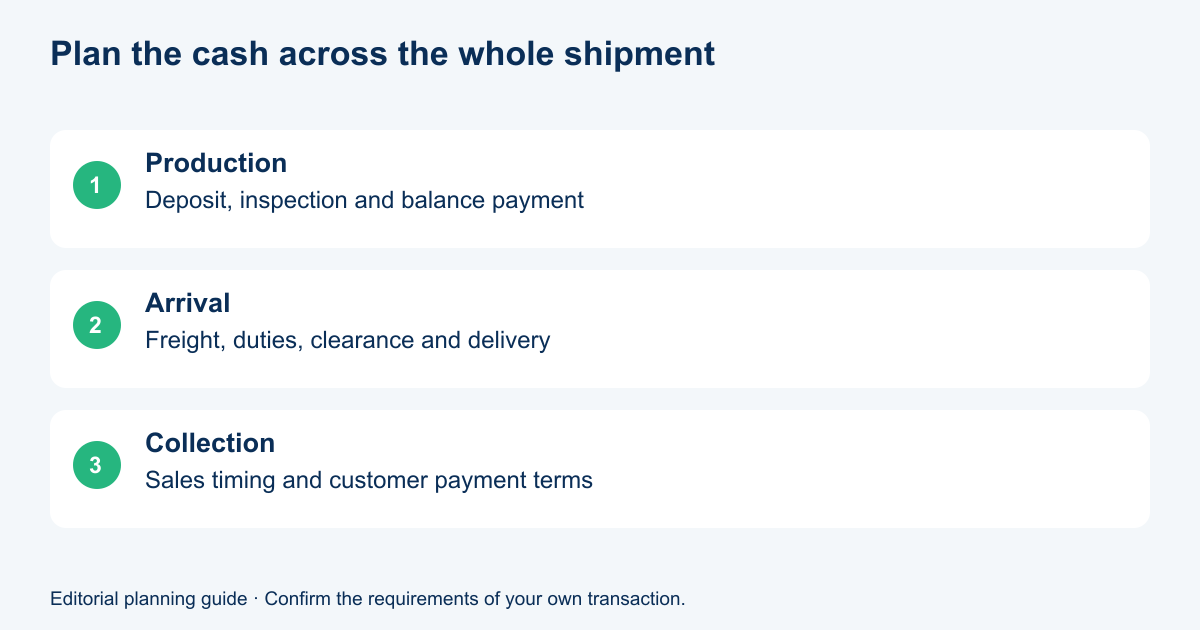
Separate production milestones from payment milestones. Plan the vendor deposit, balance payment, freight bill, and arrival costs before you agree to customer delivery dates.
Step eight: prepare documents before departure
Check the commercial invoice, packing list, transport document, and any product-specific documents. Ensure quantities, descriptions, parties, and values agree. Ask the broker what additional information is needed for the entry and any bond arrangements.
For covered ocean shipments, plan the Importer Security Filing before loading. CBP explains the ISF timing: most required data must be provided no later than 24 hours before loading, with specific timing rules for the remaining elements and certain shipment types. It is not a task to leave until arrival.
By the numbers: follow three dates
Track the vendor payment date, expected delivery date, and expected customer collection date. These are your own planning inputs. Their spacing determines how long the order may tie up cash, and none should be treated as guaranteed merely because it appears on a quotation.
Step nine: reconcile the shipment and the entry
When goods arrive, record shortages, defects, and delivery issues promptly. Reconcile the customs entry with the invoice and duty estimate. Keep the supporting records and ask your broker about discrepancies while the shipment is still fresh.
Before repeating the order, compare estimated and actual landed cost. Review inventory turnover and the cash required for the next purchase. Learning how to import from China includes this review: the second order should benefit from what the first one taught you.
Plan vendor payments with Drip Capital
Drip Capital's Vendor Financing pays vendors directly, with repayment terms of up to 90 days, subject to approval and terms. Evaluate it against production, transit, sales, and customer collections. Financing does not replace customs compliance or make a shipment's margin certain.
Frequently asked questions
Do I need a general license for importing from China?
CBP does not issue a blanket license for every commercial import. Product-specific permits, registrations, and other requirements may apply. Check the actual goods and responsible agencies before purchasing.
Can the factory choose my US tariff code?
The factory can provide technical information and a proposed code. The US classification should be checked against the product and applicable tariff provisions. Keep the evidence supporting the entry.
Should I choose air or ocean freight?
Compare total delivered cost, cargo characteristics, and the deadline you need to meet. Include the cost of inventory arriving early or late. A lower freight quote may be less useful if it creates a stockout or an unaffordable cash gap.