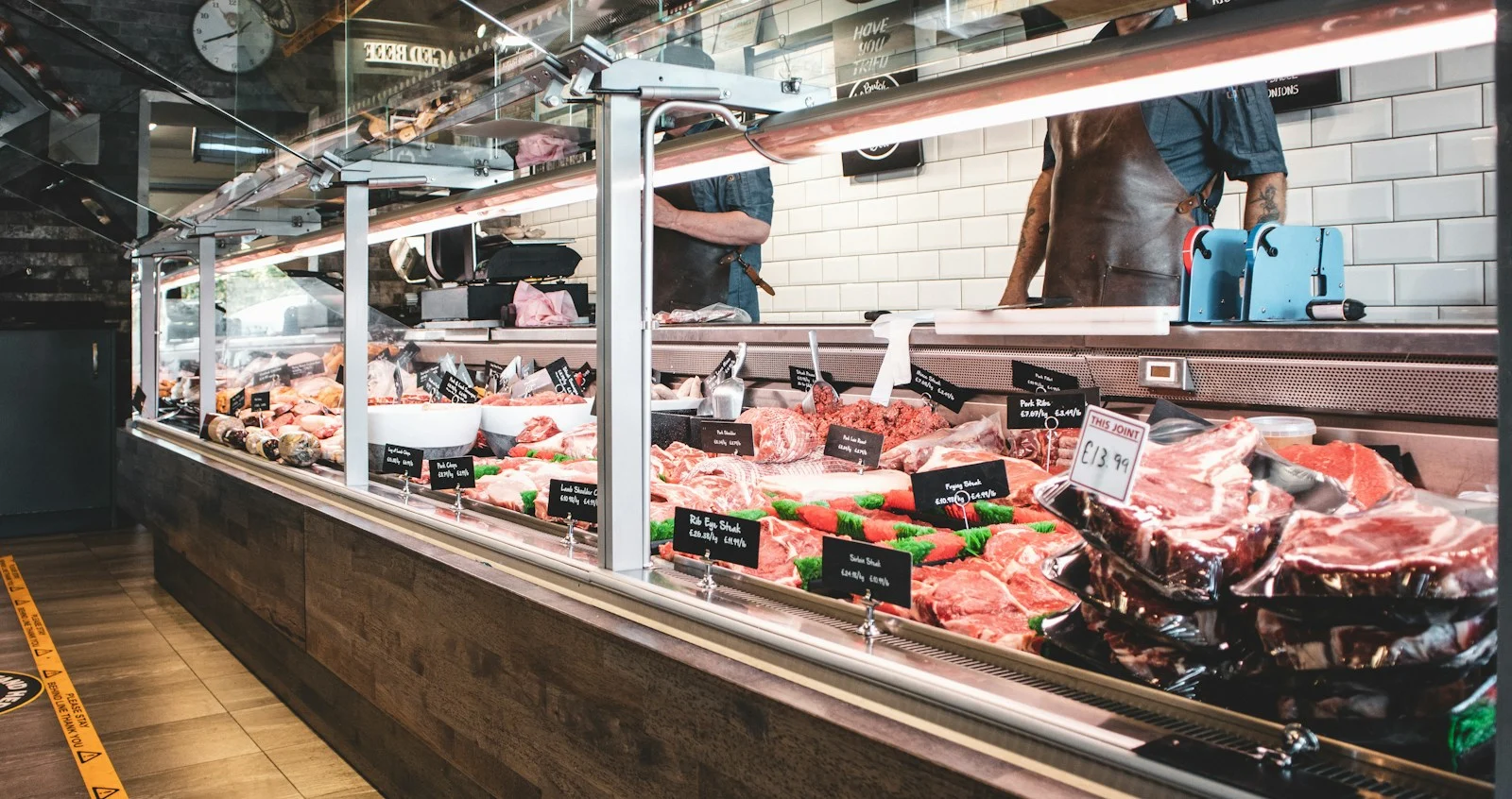

Photo: Kyle Mackie / Unsplash. Illustrative stock photograph.
Pricing seems to be something everyone in the beef industry has a constant beef with. And lately, there has been plenty to talk about.
Beef used for processing is getting cheaper. Imported beef prices have dropped, and domestic trimmings have fallen too. If you import, process or distribute beef, this can look like a good time to buy more.
But store prices have barely moved.
The September BLS figures put ground-beef prices 0.8% below August, after seasonal adjustment, but still 5.4% above a year earlier. The stores and restaurants you sell to aren’t seeing much of a drop yet. So should you stock up now? Not until you know your buyers are ready to sell more. Here’s why.
What has actually become cheaper?
The biggest drops are in the beef that goes into ground beef. Fatty trimmings, the fat-heavy cuts used in the mix, fell from about $1.85 a pound in May and June to $0.89 by mid-October. That’s a drop of about 52%. Lean beef also fell, from about $4.49 to $3.92, or about 13%, over roughly six weeks, according to economists Josh Maples and David Anderson.
Two things are behind this. Heavier, fattier cattle have added to the supply of fatty trimmings. And USDA also links falling domestic lean-beef prices to cheaper imported alternatives.
Those are meaningful changes for a processor. But ground beef is a mix of the two, and they fell by very different amounts. A 52% drop in fatty trimmings doesn’t make ground beef 52% cheaper to produce. Processing, packaging, refrigeration, and delivery still have to be paid for.
There is also a limit to this comparison: September’s retail data cannot show the response to wholesale declines that continued into October.
Your buyer may already have agreed on a price
Stores and restaurants plan their prices and promotions months in advance, says Bernt Nelson, an economist at the American Farm Bureau Federation. So when beef gets cheaper to buy, it takes time to show up on the shelf.
Farm Bureau’s own sample of 41 stores across 22 states found that 80% lean ground beef fell from $7.29 a pound on September 2 to $7.16 on October 5. Thirteen cents. A decline, but hardly a dramatic one. By the way, this was a store sample, not a national average.
Nelson also points out that cheaper imports don’t guarantee an equal drop in store prices. But we cannot tell from these figures how much any individual business might actually have profited. Because, as USDA explains, the wholesale-to-retail gap includes their own running costs and profits.
What does this mean for the next order?
A high market price tells you what beef is selling for. It does not tell you how fast it’s selling, whether your buyers need more, or what they will pay for it.
That, actually, is the conversation worth having. Is the buyer planning a promotion? Are they still working through earlier purchases? Has the cheaper price brought in more orders yet?
Store prices could fall further if cheaper beef lasts. But USDA still expects tight domestic supply into 2027, while holiday demand asks for ribs and loins. Different parts of the market can keep moving in different directions.
So for now, hold off on stocking up or offering discounts until your buyers are ready to sell more. Money in the bank is still going to be better than piled up inventory going bad.