

Business Line of Credit Alternatives: 7 Options and When Each One Fits
A Line of Credit is one of the most flexible ways to fund a business, but it is not always the right tool, and it is not always one you can get. You might have been declined for a thin credit file. The fees might not work for how you would actually use it. Or your need might be one large purchase, which a revolving line is not built for.
Whatever the reason, you have options. Eighty-six percent of firms use financing on a regular basis, and a Line of Credit is only one product on the shelf. Of the firms that applied for financing last year, only 42% received the full amount they sought, so plenty of owners end up needing a second choice.
This guide walks through seven alternatives to a business Line of Credit and the situation each one suits best.
Why Look Beyond a Line of Credit?
A few common reasons push owners to look elsewhere. Approval is the first: newer businesses and those with limited credit history often cannot clear a bank's bar. Cost is the second: a line with a low headline rate can carry draw, maintenance, and inactivity fees that add up. The third is fit. If your need is a one-time order or a fixed investment, a different structure usually costs less.
By the numbers
Why owners look beyond a line of credit
86%
of firms use financing
on a regular basis
42%
got the full amount
they applied for
22%
of applicants received
no financing at all
59%
of borrowers signed a
personal guarantee
Source: Federal Reserve Banks, 2026 Report on Employer Firms (2025 Small Business Credit Survey)
Seven Alternatives to a Business Line of Credit
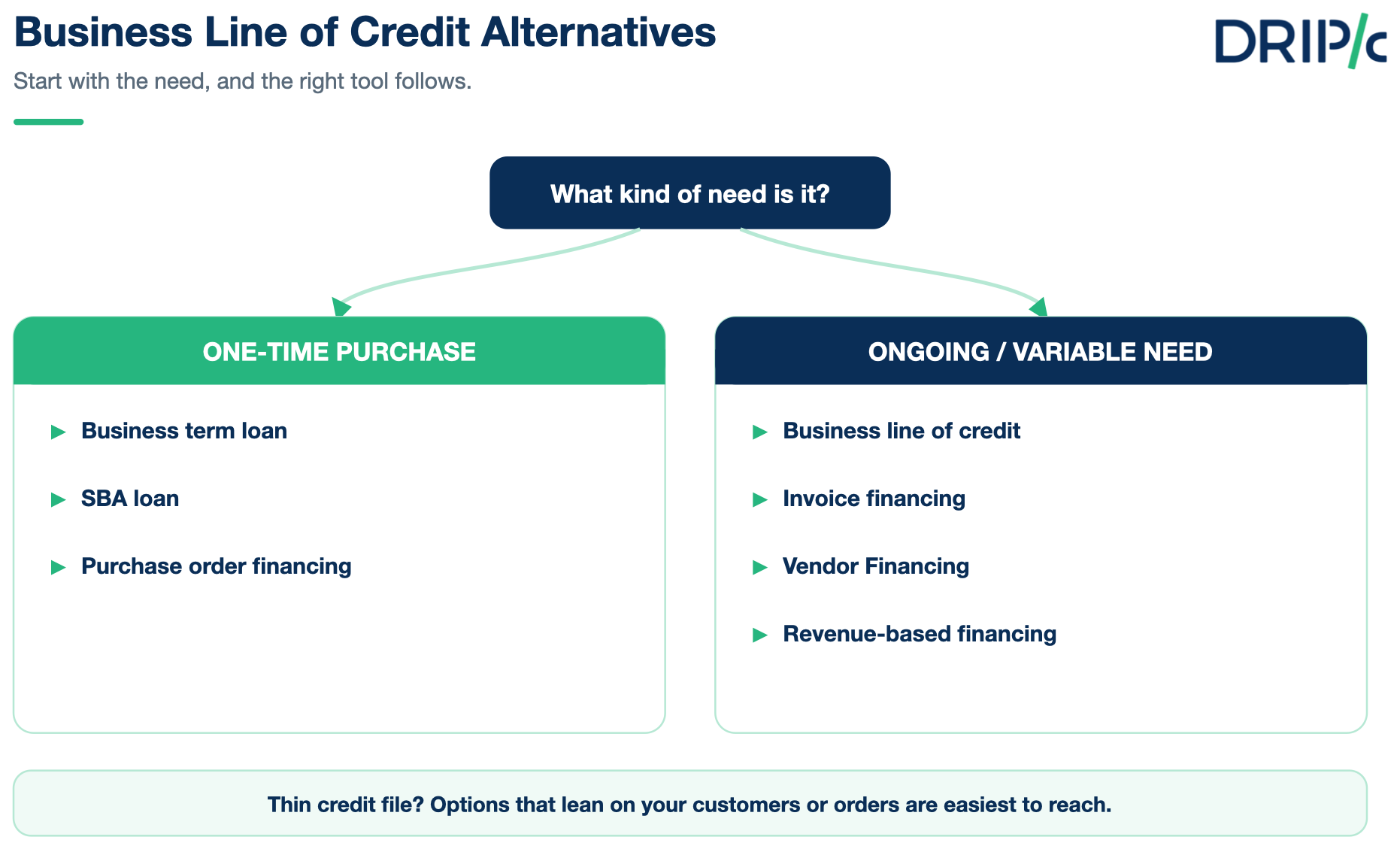
Each option below solves a different problem. The trick is to match the tool to the need.
A business term loan
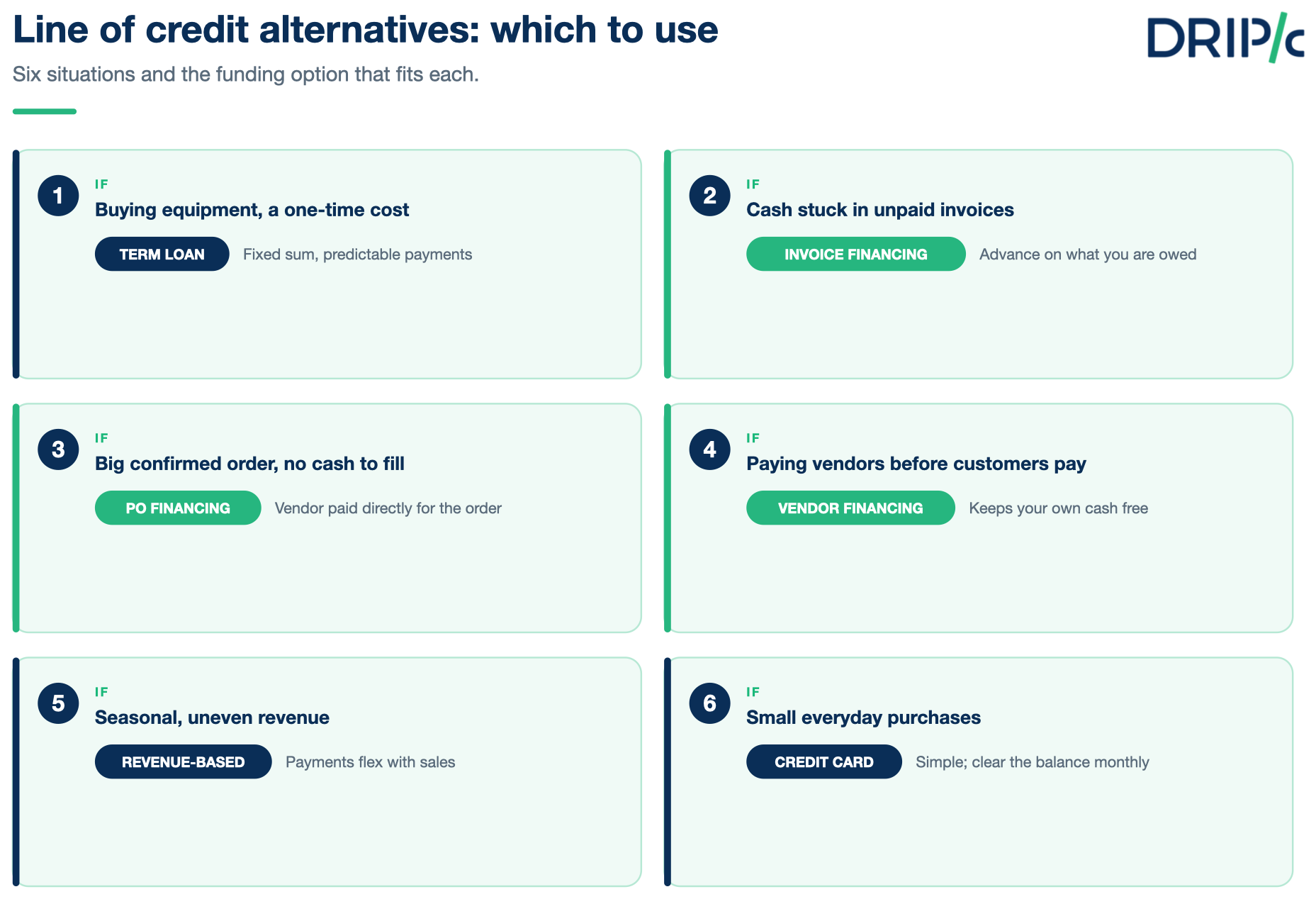
A business term loan gives you a lump sum repaid over a fixed schedule. It suits a defined, one-time investment such as equipment or a buildout, where you know the exact amount and want predictable payments. For ongoing, variable expenses it is a poor fit.
An SBA loan
Backed partly by the Small Business Administration, an SBA loan offers long terms and competitive rates. The tradeoff is paperwork and time: approval can take weeks. It fits established businesses planning a major, patient investment. For an urgent cash gap, it is too slow.
A business credit card
For small, everyday purchases, a business credit card is the simplest option. Used carefully and paid in full, it can even earn rewards. Carried as a balance, the interest is steep, so it works best for short-term spending you clear each month. Our guide to small business loans covers where cards fit among larger options.
Invoice Financing
If your cash is tied up in unpaid invoices, invoice financing advances a percentage of what you are owed. You get paid now, months before the invoice would otherwise clear. It fits businesses with creditworthy customers and long payment terms, and it scales with your sales.
Purchase Order Financing
When you have a confirmed order you cannot afford to fulfill, purchase order financing pays your vendor directly so the goods can ship. Approval leans on the strength of the order and your customer, which makes it reachable for younger businesses. It suits large one-off orders in physical goods.
Vendor Financing
Vendor Financing lets you take delivery from a vendor now and repay over an agreed term. It keeps your own cash free while goods move through your supply chain, and it suits importers and distributors who pay vendors before their own customers pay them.
Revenue-based Financing
With revenue-based financing, you repay a set percentage of monthly revenue until a fixed amount is met. Payments flex with your sales, which helps seasonal businesses. The cost can run high, so it fits companies with strong, steady revenue and a clear use for the capital.

How to Choose the Right Alternative
Three questions narrow the field fast. Is the need one-time or ongoing? One-time investments point to a term loan or purchase order financing; ongoing gaps point to invoice or vendor financing. How fast do you need it? Cards and invoice financing move quickly, while SBA loans take weeks. And what secures the deal? If your own credit is thin, options that lean on your customers, invoices, or orders will be easier to reach than those that lean on your balance sheet.
How Drip Capital Fits In
Drip Capital offers two of these alternatives built for growing businesses. Its Line of Credit gives revolving access without a prepayment penalty, a blanket lien, or an annual maintenance fee, so the terms that trip up borrowers elsewhere are simply absent. And Vendor Financing pays your vendor directly when an order ships, freeing your cash while goods move. Between the two, a growing trade business can match the funding to each moment, so no single product has to carry the whole load.
Frequently Asked Questions
What is the best alternative to a business line of credit?
There is no single best option; it depends on the need. A term loan suits one-time investments, invoice financing suits long customer payment terms, and purchase order financing suits large confirmed orders. Match the tool to the problem.
Can I get financing if I was declined for a line of credit?
Often, yes. Options like invoice financing and purchase order financing lean on your customers and orders, so a thin credit file or a decline on a line of credit does not rule them out.
Which alternative is cheapest?
SBA and traditional term loans usually carry the lowest rates, but they are the slowest to secure. Faster options like revenue-based financing or cards cost more. The right balance depends on how quickly you need the funds.
Is vendor financing better than a line of credit?
They solve different problems. Vendor Financing pays your vendor directly for a specific purchase, while a line of credit is flexible cash you draw as needed. Importers who pay vendors before their customers pay them often use both.