A purchase order (PO) is the buyer's official document telling a supplier exactly what to deliver, how much, at what price, and on what terms. Once the supplier accepts it, the PO becomes a binding contract — which is why it's the backbone of B2B buying.
What is a purchase order?
A PO is created by the buyer and sent to the seller before any goods ship. It spells out the products, quantities, agreed prices, delivery date, and payment terms. It differs from an invoice: the buyer issues the PO to order goods; the seller later issues the invoice to request payment for them.
What goes on a purchase order
- PO number and date — a unique reference used on the invoice, packing slip, and delivery docs
- Buyer and supplier details (and a separate "ship to" address if needed)
- Line items — description/SKU, quantity, unit price, and line total
- Payment terms (e.g. Net 30) and delivery terms / Incoterms
- Subtotal, tax, shipping, and total
- Authorized signature
Free Purchase Order Template
Below is a free, blank purchase order template with every standard field. Download it, add your line items, and send it to your supplier as a formal order. Download the purchase order template
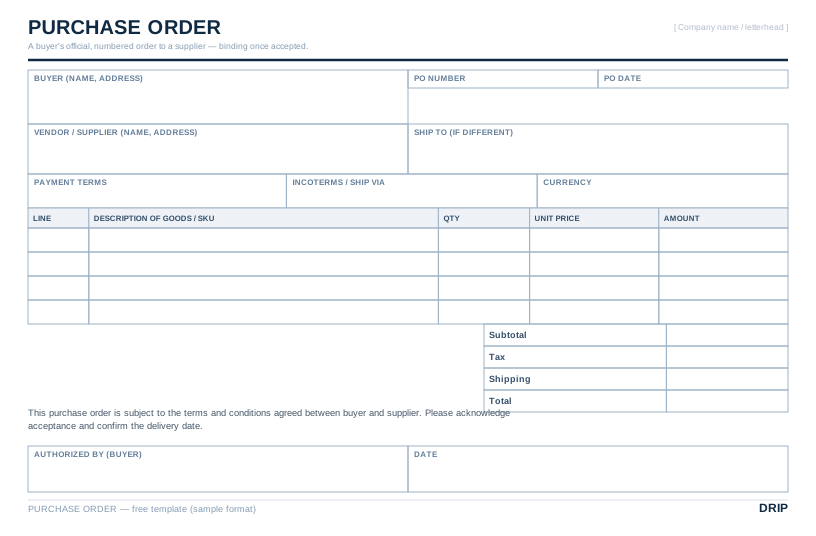
- PO number, PO date, required delivery date and buyer contact
- Buyer, vendor and ship-to details
- Shipping method, Incoterms®, payment terms and currency
- Line items with SKU, description, quantity, unit price and amount
- Subtotal, discount, tax rate, shipping and total
- Terms, buyer authorization and supplier acceptance signatures
How the PO process works
- Buyer issues the PO to the supplier.
- Supplier reviews and accepts it (acknowledgment), making it binding.
- Supplier ships the goods with a packing slip and sends a commercial invoice.
- Buyer matches the invoice to the PO (a "two-way match") and pays per the terms.
PO vs. invoice vs. sales order
The buyer issues a purchase order. The seller turns that into an internal sales order to fulfill it, then issues an invoice to get paid. Same transaction, three documents, three stages.
When a big PO is bigger than your cash
Winning a large purchase order is great — until you realize you need to pay your own supplier before your customer pays you. That gap is exactly what purchase order financing solves: a financier pays your supplier so you can fulfill the order, and you repay once your buyer pays. It lets you accept orders you couldn't otherwise afford to fulfill.
Related free templates: purchase requisition form, price list template.
FAQ
What is a purchase order? A buyer's official document ordering specific goods or services from a supplier at agreed quantities, prices, and terms. It becomes binding once the supplier accepts it.
What is the difference between a purchase order and an invoice? A purchase order is issued by the buyer to order goods; an invoice is issued by the seller to request payment for those goods.
Is a purchase order a legally binding contract? Yes — once the supplier accepts it, a purchase order is a legally binding contract between buyer and seller.
What should a purchase order include? A PO number and date, buyer and supplier details, line items with quantities and prices, payment terms, delivery terms, totals, and an authorized signature.
Can I get financing to fulfill a large purchase order? Yes. Purchase order financing pays your supplier so you can fulfill a large order, and you repay once your customer pays.
Drip Capital gives US businesses fast, collateral-free working capital to buy inventory and bridge long payment terms. See if you qualify →