

Who Qualifies for Purchase Order Financing? Requirements and How to Get Approved
Purchase order financing can fund an order you could not otherwise afford, but approval works differently from a bank loan. A lender studies your history and balance sheet. A purchase order financier studies the deal in front of you: the order, the customer who placed it, and the vendor who will fill it.
That difference is good news if your business is young or asset-light. Sixty percent of firms applied for financing last year, often to pursue a new opportunity, yet only 42% received the full amount they sought. Knowing the criteria before you apply is the fastest way to land in the approved group.
This guide covers who qualifies, what disqualifies you, and the documents you may need.
How Purchase Order Financing Approval Works
Approval rests on three parties at once. The financier checks that your customer is creditworthy enough to pay the invoice, that your vendor can produce and ship on time, and that the order itself is confirmed and profitable. Your own credit history matters far less than it would for a loan, because the order is what gets financed. For the mechanics, see our guide to purchase order financing.
By the numbers
What it takes to qualify
60%
of firms applied for
financing last year
42%
got the full amount
they applied for
20%+
gross margin most
financiers require
2+
years in business,
the typical minimum
Source: Federal Reserve Banks, 2026 Report on Employer Firms (2025 Small Business Credit Survey)
Who Qualifies: The Core Requirements
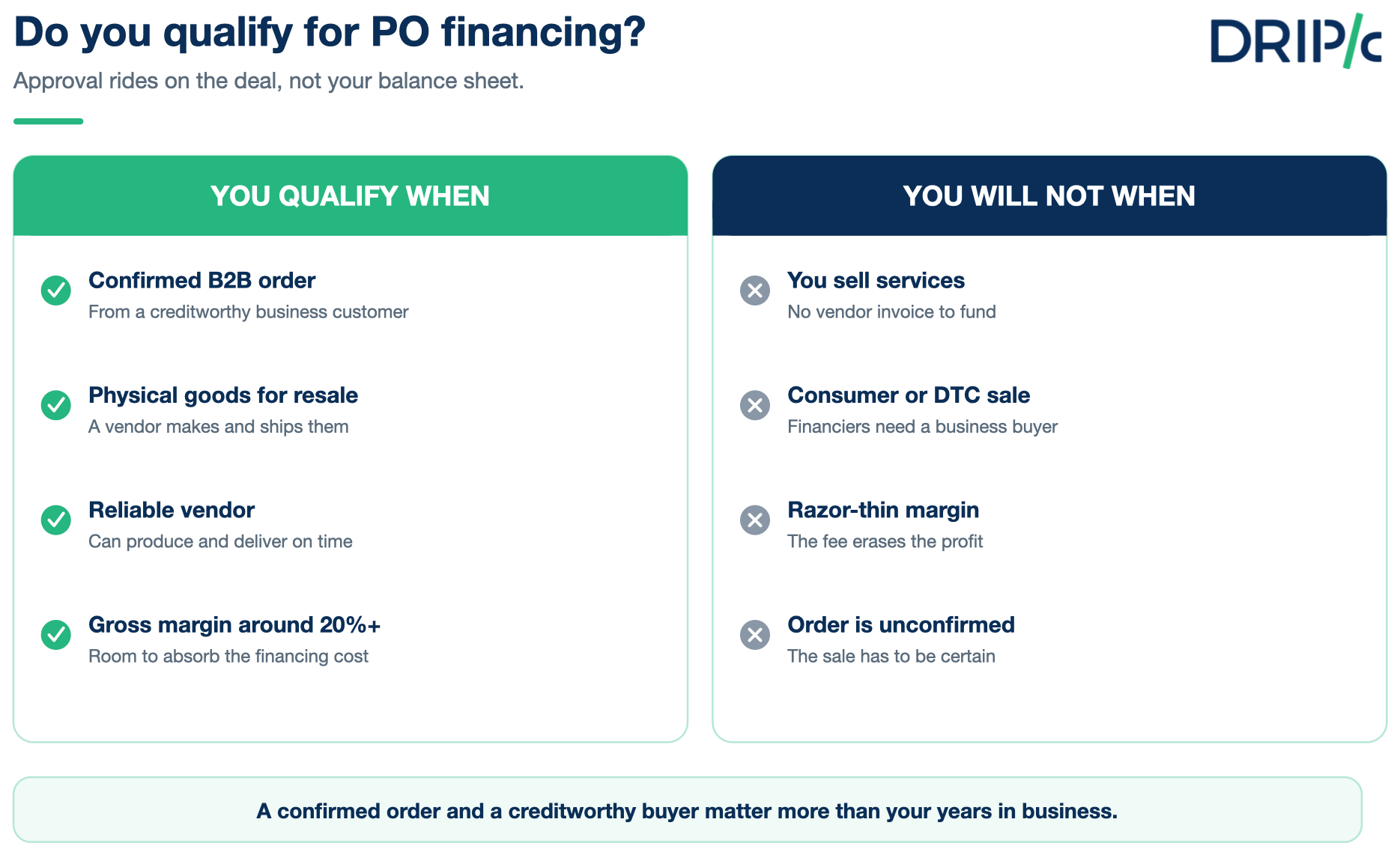
Most financiers look for the same handful of things. Clear these and your odds are strong, provided you meet the minimum time-in-business bar most financiers set.
A confirmed order from a creditworthy customer
You need a firm purchase order from a business customer. A verbal promise or a consumer sale will not do. The customer's ability to pay is central, since repayment comes from their settled invoice. A strong retail, government, or corporate buyer helps most.
Physical goods for resale
Purchase order financing funds tangible products that a vendor makes and ships. Finished goods for resale fit cleanly. Services, custom builds, and work-in-progress are harder to finance because there is no clean vendor invoice to fund.
A reliable vendor
The financier pays your vendor directly, so that vendor has to be credible and able to deliver on time. A vendor with a track record of fulfilling orders reassures everyone in the deal.
A healthy gross margin
The financing cost comes out of your margin, so financiers want enough room to absorb it. A gross margin around 20% or more is a common threshold. Thin-margin orders often do not clear the math.
At least two years in business
Purchase order financing weighs the deal more heavily than a bank loan does, but most financiers, including Drip Capital, still set a minimum operating history — typically two years. A strong order and a creditworthy buyer make approval easier once you clear that bar; they do not replace it.
What Disqualifies You
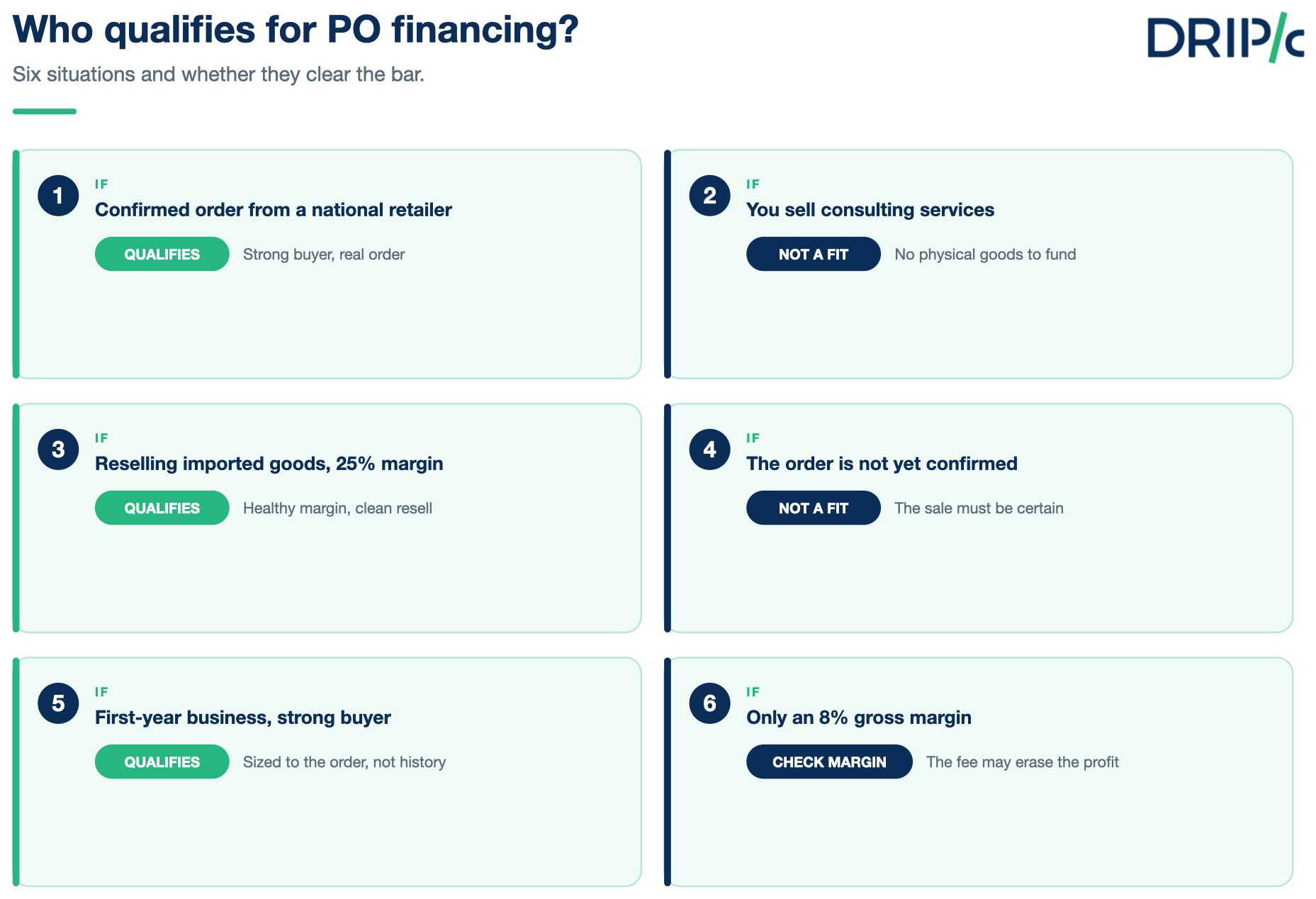
Some deals are a poor fit no matter how strong the demand. Service businesses with no vendor invoice, orders below a financier's minimum, consumer or direct-to-consumer sales, and razor-thin margins all tend to fall outside the box. An unconfirmed or partial order is another common blocker, because the financier needs certainty that the sale is real.

Documents You Will Need
Having your paperwork ready speeds approval considerably. Expect to provide the confirmed purchase order, details on your customer so the financier can check their credit, the vendor's invoice or pro forma showing the cost of goods, and your business formation documents. A working capital loan or invoice financing may ask for more of your financials; purchase order financing keeps the focus on the transaction.
How Drip Capital Can Help
For importers and distributors who fit the profile, Drip Capital funds the goods behind an order so you don't have to turn away orders. With Vendor Financing, Drip Capital pays your vendor directly when the order ships, and repayment falls within an agreed window, typically up to 90 days. Approval leans on the strength of the trade, provided your business also meets Drip Capital's minimum of two years in operation.
Frequently Asked Questions
Do I need good personal credit to qualify for purchase order financing?
Personal credit matters far less than it does for a bank loan. Financiers focus on the creditworthiness of the customer who placed the order and the reliability of your vendor, so a thin or imperfect personal file is rarely a dealbreaker.
Does my customer's credit matter more than mine?
Yes. Because repayment comes from your customer paying their invoice, their ability to pay is the single most important factor in approval. A strong business customer is your biggest asset in the application.
Can a brand-new business qualify?
Not in its first year. Purchase order financing weighs the deal more heavily than a bank loan does, but most financiers, including Drip Capital, still require a minimum operating history, typically two years. A confirmed order and a creditworthy customer strengthen an application once that bar is met, but they do not replace it.
What if I sell services instead of physical goods?
Purchase order financing generally will not fit, because there is no vendor invoice for physical goods to fund. Service businesses are usually better served by invoice financing or a Line of Credit.