

Photo: Kelly Sikkema / Unsplash. Illustrative image.
A Fed rate decision gets a headline. Your loan gets a contract. The connection between the two is what deserves a closer look.
On October 28, 2026, the Federal Reserve held its federal funds target range at 3.75%–4%. For a business borrower, that means this meeting delivered no policy-rate cut to pass through to a loan. Your borrowing cost still depends on your contract, lender, and repayment timing.
For an importer buying holiday inventory, the question is whether waiting could save enough to justify delaying a purchase. Start with three things: whether your loan can reprice, how long you will carry the balance, and what happens to the order if you wait.
What Does the Fed Actually Decide?
The Federal Open Market Committee sets a target range for the federal funds rate. Its decisions influence financial conditions and short-term borrowing costs. They do not set one universal interest rate for every business loan.
The Fed explains that individual banks determine their prime rates, often using the federal funds target as one input. Prime can then serve as a reference rate in a small-business lending agreement.
Why Your Loan May Move Differently
Your contract may use prime, another benchmark, or a fixed rate. It can also specify a margin added by the lender, a minimum rate, and a reset schedule. Each detail affects how a market change reaches your bill.
Our commercial Line of Credit rates guide explains the difference between a reference rate and the full borrowing cost. Keep the latest statement and the signed agreement together when comparing them.
By the Numbers: Understand the Size of a Change
October's decision was a hold. The following is a hypothetical illustration of a future rate reduction, not a prediction or a financing quote. Assume an unchanged $100,000 balance and a loan rate that falls by 0.25 percentage points for an entire year.
assumed outstanding balance
throughout the example.
assumed reduction in
the loan's annual rate.
approximate annual interest reduction
before fees or balance changes.
Illustrative example; assumptions and calculations are explained in the article.
A 0.25-percentage-point change is also called 25 basis points. Now shorten the same example to a 90-day inventory cycle: the saving is about $62, using a 365-day year. That assumes the full $100,000 stays outstanding for all 90 days and the lower rate applies from day one. Repayments during the period or a later reset would reduce that saving. Actual charges depend on your agreement's calculation method.
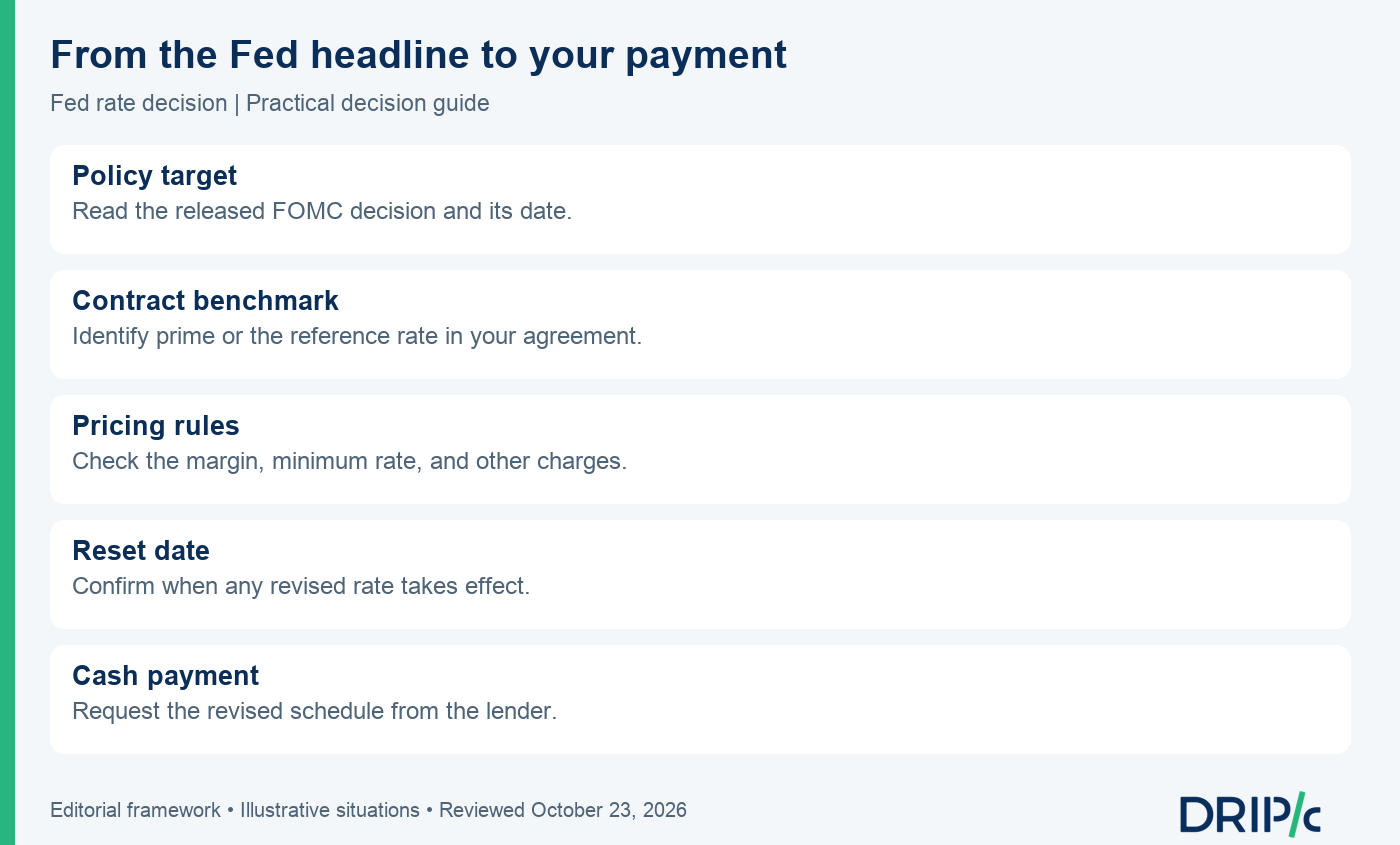
Figure 1. Fed rate decision: follow the change from the announcement to your contract. A policy change alone does not establish a payment change.
Which Business Loans Could Be Affected?
Variable-Rate Loans
A variable rate can change under the rules in the agreement. If the reference rate falls, the loan may become cheaper at its next reset. A rate floor could limit the reduction, and other pricing terms may also matter.
Ask the lender for the new rate, effective date, and revised payment estimate in writing. Do not calculate the change using the Fed headline alone.
Existing Fixed-Rate Loans
An existing fixed rate generally remains the agreed rate for its fixed period. A lower market quote elsewhere does not automatically change that contract. Refinancing may be an option, but it involves a separate decision and potentially new costs.
Read the C&I loan rates explainer before comparing the old rate with a new offer. Compare the remaining borrowing period and balance, too.
New Loan Applications
A new quote can reflect the lender's funding costs, expected market conditions, the business's finances, and the transaction. Lenders may price expectations before an announcement. Approval standards and credit availability can also change independently of the headline rate.
A rate cut therefore does not establish that you will qualify for more credit or receive a particular price. Ask how long the quote is valid and what could change before funding.
Fixed-Fee Financing
Some facilities charge using a fee structure instead of a floating annual interest rate. A Fed decision may have no automatic effect on the agreed charge. Read the pricing terms and ask the provider directly about any proposed new transaction.
The working capital funding comparison can help you compare structures without assuming they all respond the same way.
Should You Wait Before Borrowing?
In the 90-day example, waiting would save only about $62 if the assumed rate reduction reached the loan in full. If delaying that order costs more than $62 through a lost discount, extra freight, or lost profit on a sale, the saving has already been used up. Calculate those costs for the actual order before moving the payment date.
If the purchase can wait without a commercial cost, an updated quote may be worth getting. Ask for the total dollar cost over the period you expect to use the money. A small rate change matters more on a larger balance held for longer; it may matter very little on a short inventory cycle.
Before committing, write down the payment deadline, the amount required, and the cost of postponing the purchase. Keep the financing decision tied to the order you are funding.

Then ask the provider to price the same amount over the same expected period. Comparing mismatched repayment schedules can make a modest rate difference look more useful than it is.
The October Hold and What to Watch Next
If the Fed Lowers Its Target Range at a Future Meeting
Check whether your reference rate changes, whether your loan has reached its floor, and when the change takes effect. For new borrowing, ask for an updated quote. Any claim about Fed rate cuts should distinguish the policy move from the movement in your own contract.
What the October Hold Means
October's hold leaves the policy target unchanged at 3.75%–4%. It does not freeze every lender's pricing or remove other business risks. You can still review fees, usage, collections, and the size of your outstanding balance.
Our common Line of Credit uses guide can help you decide which expenses belong on a revolving facility in the first place.
If the Fed Raises Its Target Range at a Future Meeting
Run a higher-rate scenario for variable borrowing. Check when a reset could occur and whether your cash forecast can absorb it. An existing fixed-rate facility needs a separate review of its maturity and any future refinancing requirement.
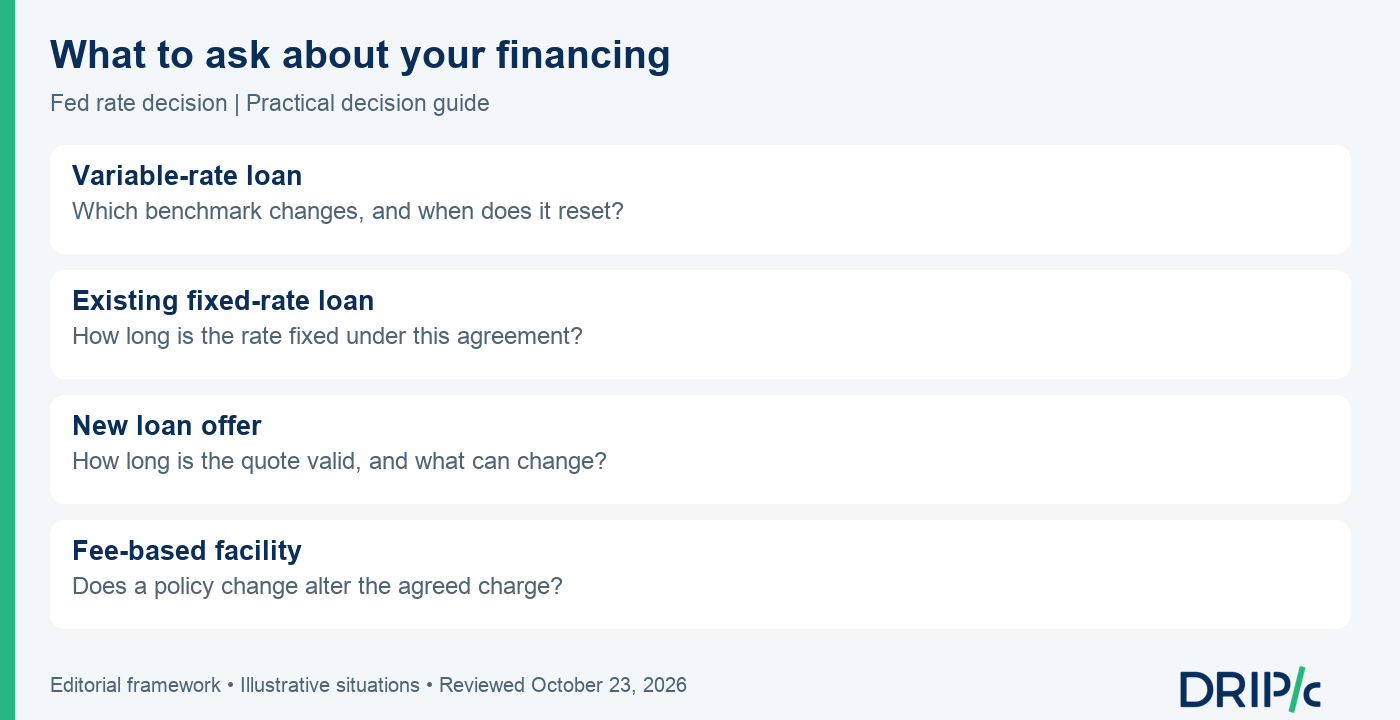
Figure 2. Fed rate decision: what to ask for each borrowing situation. Scenario checklist, not an October forecast.
What to Do After the Announcement
Read the Statement Before the Commentary
Use the October 28 FOMC statement to reach the released statement. Confirm the decision and its date before relying on a news summary. Forecasts and market expectations are not the released decision.
The October 28 statement confirms a hold at 3.75%–4%. Check the reference rate and reset terms in your agreement before assuming your payment will change. Any expectation about the next meeting remains a forecast.
Update the Cash Forecast
Separate interest from principal repayments, operating costs, and customer collections. Lower interest cannot solve a large payment arriving before the cash to cover it. Review vendor contracts and payment dates alongside the loan.
For a wider comparison, see small-business funding options. Choose around the business's repayment capacity and total cost, with the rate announcement as one input.
Where Drip Capital Fits
Drip Capital's Line of Credit offers revolving working capital, with each draw repaid over six monthly installments. Vendor Financing pays vendors directly, with repayment terms of up to 90 days, subject to approval and agreed terms.
These descriptions do not promise a pricing change after a Fed announcement. Talk to Drip Capital about the amount, timing, and repayment needs of your next business purchase.
Frequently Asked Questions
Has the October 2026 Fed Decision Happened?
Yes. On October 28, 2026, the Federal Reserve held the federal funds target range at 3.75%–4%. The decision did not automatically change the rate or payment on every business loan.
Does a Fed Rate Cut Lower Every Business Loan Payment?
No. The rate structure, benchmark, floor, reset timing, outstanding balance, and repayment method determine the effect on a particular loan.
Will My Fixed-Rate Loan Become Cheaper?
The agreed rate generally stays in place during its fixed period. A refinancing offer should be evaluated separately, including any costs of closing the existing facility.
Should I Borrow More if Rates Fall?
A lower rate does not establish demand for another purchase or the cash to repay it. Start with the order economics and the repayment forecast, then compare available financing.