
Photo: Rodrigo Rodrigues | WOLF ART. Illustrative image.
An invoice can appear in your sales report long after the customer has stopped answering your calls. Your books still show money coming in. Your bank balance tells a different story.
Bad debt expense recognizes the part of credit sales you do not expect to collect. For a wholesaler, that matters twice: it affects reported profit, and it exposes cash that may never arrive to pay the next vendor bill. Here is how the calculation works, what the accounting entries mean, and where the tax treatment differs.
What is bad debt expense?
It is an expense associated with credit losses on amounts customers owe. A late invoice needs investigation; lateness alone does not establish that the full balance is uncollectible. Check disputes, payment history, the customer's circumstances, and evidence of collection efforts.
The FASB credit-loss standard includes trade receivables within its expected-credit-loss framework. The accounting method and requirements that apply to your business should be confirmed with your accountant.
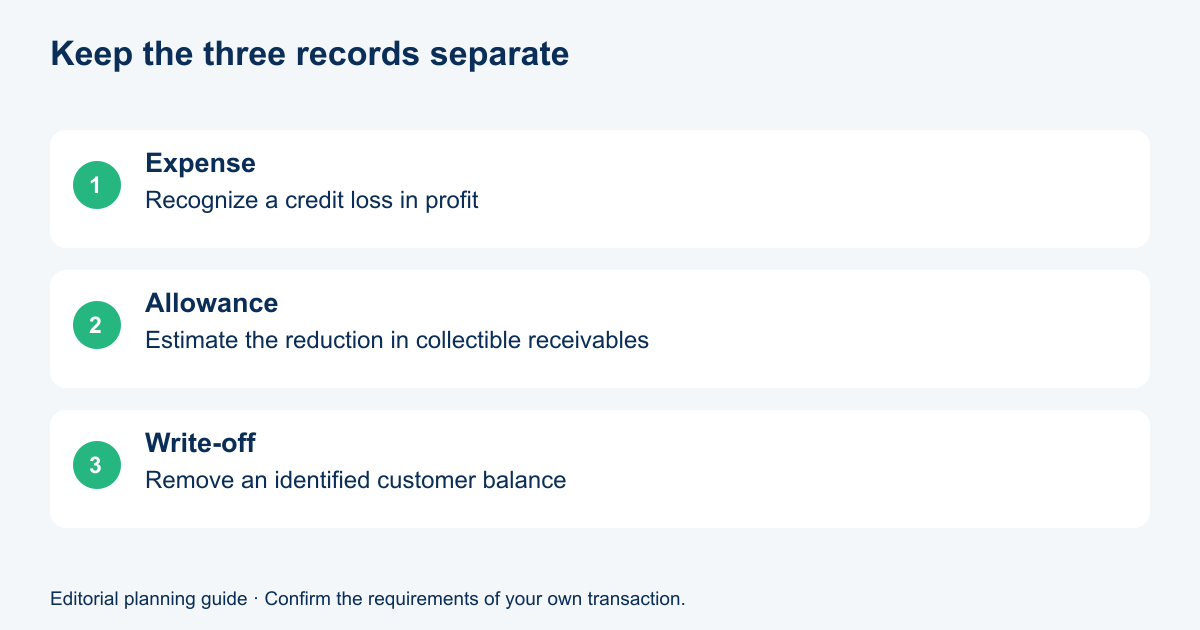
Expense, allowance, and write-off: three different records
Bad debt expense affects profit
Recording the expense reduces income for the period. It does not put cash into the business or cancel the original cost of delivering the order.
The allowance reduces receivables on the balance sheet
An allowance for doubtful accounts is a separate account that reduces the receivables balance to an estimated collectible amount. It lets the business recognize expected losses while individual customer invoices remain in the ledger.
A write-off removes a specific balance
A bad debt write off removes an identified uncollectible receivable. Under an allowance approach, that entry uses the allowance already recorded. It ordinarily creates no new expense at that moment, although the remaining allowance still needs review.
How to calculate bad debt expense
Start with a clean accounts receivable management process. Reconcile the customer ledger, post payments and credit notes, and separate genuine credit risk from billing errors. Estimating losses on an inaccurate list produces an inaccurate answer.
Build an aging schedule
Group open balances by days past due. Then evaluate historical losses and relevant current conditions. Review unusually large or troubled accounts individually where appropriate. An aging schedule is useful evidence; a fixed percentage copied from another company is a weak substitute for your own experience.
Estimate the allowance needed at period-end
Imagine a distributor estimates that $8,000 of its open receivables will not be collected. Its allowance already has a $3,000 credit balance after the period's write-offs and other entries. The additional expense needed to reach the target is $5,000.
These are illustrative figures, not an industry benchmark. If the allowance instead had a debit balance, the required adjustment would be larger. Use the current balance immediately before the adjustment.
Check what your percentage actually measures
A bad debt ratio can refer to different calculations. If you use bad debt expense divided by credit sales, label it that way and keep the same period in both figures. A ratio based on write-offs or ending receivables answers a different question. Agree on the definition before comparing teams, periods, or companies.
Journal entries: a worked example
For the illustrative $5,000 adjustment, debit bad debt expense and credit the allowance for doubtful accounts. Gross receivables stay unchanged; the allowance increases and net receivables fall.
Later, if a particular $2,000 customer balance is written off, debit the allowance and credit accounts receivable. The entry removes the invoice and reduces the allowance by the same amount. Keep the approval and supporting collection evidence with the record.
If money is eventually recovered, ask your accountant how to record the recovery under your accounting policy. Do not leave the receipt unmatched simply because the original invoice disappeared from the open-invoice report.
Review the effect on your working-capital plan before committing cash based on the original collection forecast.

The practical check is simple: the accounting entry and the cash forecast must tell a consistent story. A customer balance can remain under collection while the business plans for a lower recovery.
When does the direct write-off method apply?
Under the direct write-off method, a business records the expense when a specific receivable is identified for write-off. That timing differs from estimating losses through an allowance. Do not assume the method appropriate for a tax return is also appropriate for financial statements prepared under US GAAP.
Ask your accountant which framework applies, how material the balances are, and whether your lender requires particular reporting. Document the policy so the month-end treatment does not change with the person closing the books.
Is bad debt expense tax-deductible?
A book expense does not automatically establish a tax deduction. The IRS bad-debt guidance explains that a deductible debt generally must have been included in income or represent money loaned out. A cash-method taxpayer generally cannot deduct unpaid income that was never included in taxable income.
For an accrual-method business, an uncollectible trade receivable may qualify when the applicable requirements are met. Have a tax professional review worthlessness, documentation, timing, and any partial deduction. An allowance estimate alone is not the same as establishing a deductible bad debt.
By the numbers: what the example changes
The illustration adds $5,000 of expense to reach an $8,000 allowance. The later $2,000 write-off uses part of that allowance. Cash received from those entries: $0. These figures describe the example only.
What should a small business do with this information?
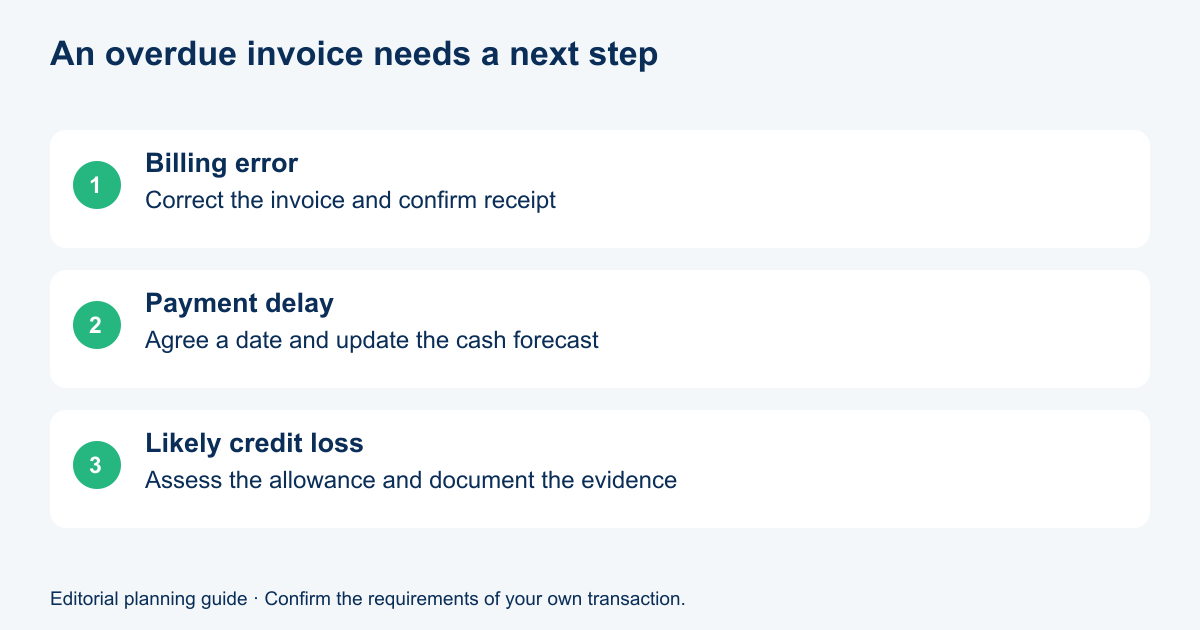
Review repeated losses by customer and sales terms. Tighten vendor and customer payment planning, record disputes early, and give one person responsibility for following up each overdue account. Consider smaller credit limits or deposits where the relationship supports them.
Keep doubtful collections out of cash you have already promised elsewhere. Your next inventory purchase still needs funding even when the previous sale becomes a loss.
Plan the next cash commitment with Drip Capital
Drip Capital's Vendor Financing pays vendors directly, with repayment terms of up to 90 days, subject to approval and applicable terms. It can support the timing of new purchases. A bad customer debt remains a loss that the business must account for and absorb; financing does not recover that invoice.
Frequently asked questions
Is bad debt expense the same as accounts receivable?
Accounts receivable records amounts customers owe. Bad debt expense recognizes expected or identified credit losses, depending on the accounting method. The allowance reduces the reported collectible value of receivables.
Does every overdue invoice need to be written off?
No. Investigate the reason for delay and assess collectibility. A disputed invoice, missing purchase-order number, or temporary delay may require a different response from an insolvent customer.
Can I use last year's percentage again?
Historical experience can inform the estimate, but review whether the customer mix and circumstances have changed. Your accountant can help determine the adjustments needed under your reporting framework.