

Photo: Bernd Dittrich / Unsplash. Illustrative image.
A full warehouse can mean you are ready for the next rush. It can also mean you bought too much of the wrong thing. The inventory turnover ratio helps you start telling the difference.
It compares the cost of goods sold with the average inventory held during the same period. That gives you a useful measure of how quickly stock moves through the business. But the number needs context. A faster turn is not much of a victory if your best customers keep finding their items out of stock.
What Is the Inventory Turnover Ratio?
The inventory turnover ratio estimates how many times a business sells through its average inventory balance during a period. It is expressed in turns. Use the cost of inventory, not the price you hope to sell it for.
APQC's calculation guidance uses annual cost of goods sold divided by average month-end total inventory. That inventory includes raw materials, work in process, and finished goods where applicable. A wholesaler may mainly hold finished goods.
What the Ratio Cannot Tell You
The ratio does not identify which products are selling, whether sales are profitable, or when customers pay. It is an average across a defined inventory balance.
Use it alongside stock availability, gross margin, inventory age, and collections. Our working capital funding guide explains why moving goods and receiving cash belong in the same planning conversation.
The Inventory Turnover Formula
The inventory turnover formula is cost of goods sold during the period divided by average inventory during that period.
For a simple two-point estimate, average inventory = beginning inventory plus ending inventory, divided by two. If stock moves sharply during the year, monthly or more frequent averages can give a more representative view. State which method you use.
Use Cost of Goods Sold, Not Sales Revenue
Sales revenue includes the markup. Dividing it by inventory carried at cost mixes two different bases and can make the turnover figure look higher. Keep the numerator and denominator on a consistent cost basis.
Ask your accountant which general-ledger accounts belong in the calculation. The treatment of freight, production costs, and inventory adjustments needs to follow the accounting policy used for your records.
Keep the Period Consistent
Use annual cost of goods sold with an annual average inventory balance. For a quarterly ratio, use that quarter's cost and average stock. Label the period clearly before comparing results.
A fourth-quarter buying surge can distort an annual calculation based only on the opening and closing balances. The average should reflect the stock you actually carried through the period.
By the Numbers: A Worked Example
Assume a wholesaler has annual cost of goods sold of $1.2 million, opening inventory of $150,000, and closing inventory of $250,000. This is a hypothetical example using a two-point average.
average inventory, calculated
from the two balances.
$1.2 million
divided by $200,000.
365 divided by six,
an approximate annual inventory-days measure.
Illustrative example; assumptions and calculations are explained in the article.
This does not mean each item stays for exactly 60.8 days. Your fast sellers and slow sellers can behave very differently while producing the same company average.
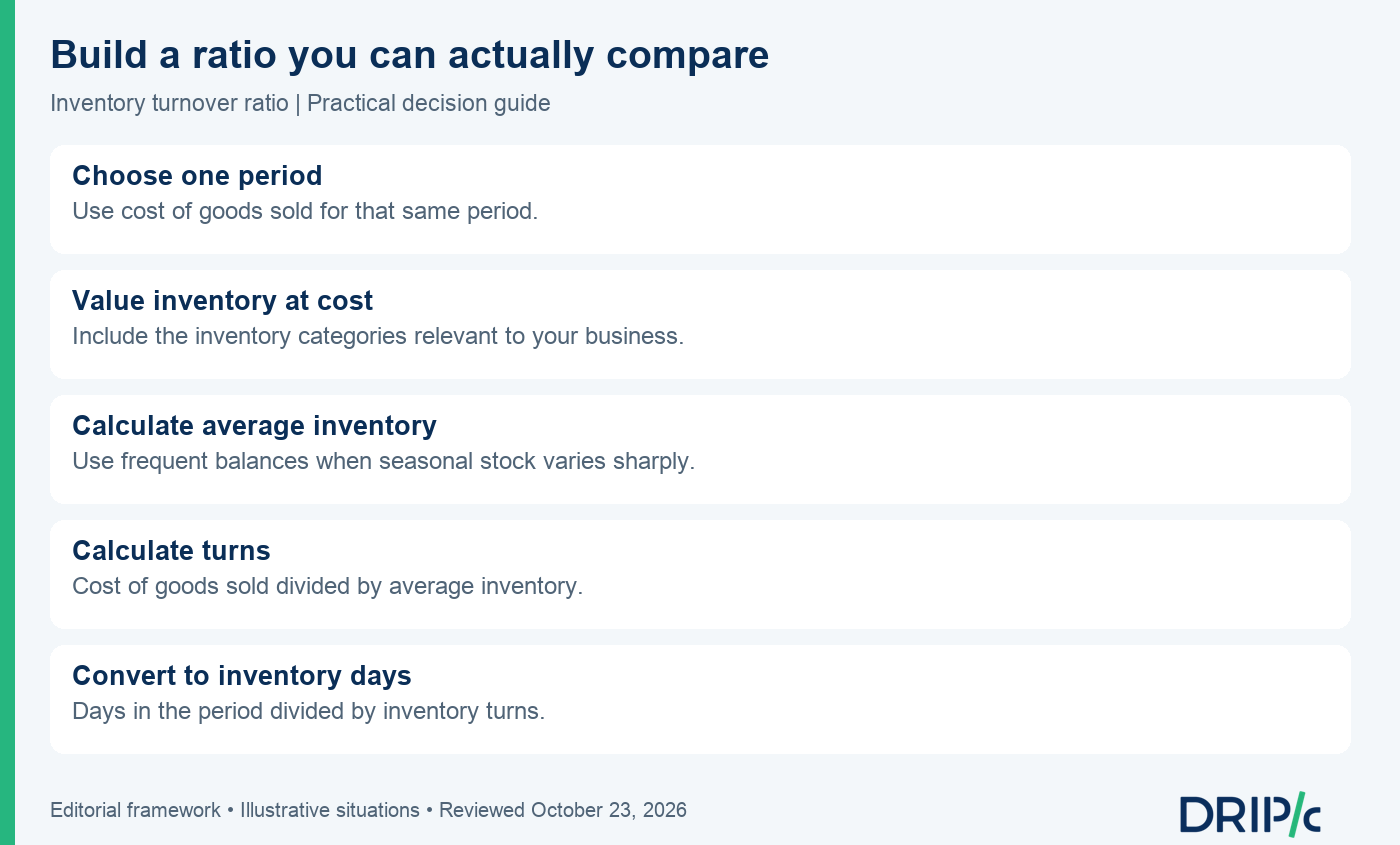
Figure 1. Inventory turnover ratio: check the inputs before interpreting the answer. Formula basis: APQC; example is illustrative.
Inventory Turnover Calculator
Enter your figures in the calculator below. It returns average inventory, inventory turns, and estimated days inventory outstanding. Use the optional average override if you already calculate a representative monthly average.
Calculate your inventory turnover
Use the same period and cost basis for every input. The example below uses a full year. Figures stay in your browser.
Average inventory = (beginning + ending inventory) ÷ 2, unless overridden. Turns = cost of goods sold ÷ average inventory. Inventory days = period days ÷ turns. These averages do not measure each item's actual time in stock. No universal ideal ratio applies to every business.
Formula basis: APQC inventory turns guidance. APQC uses average month-end inventory for its annual measure. This tool also supports a simpler two-point estimate. Compare methods consistently.
The calculator is a planning aid. It cannot validate the accounting records or decide whether a purchase is sensible. Average inventory must be positive. Review negative balances and check any zero balance against the records before interpreting the result.
What Are Days Inventory Outstanding?
Days inventory outstanding, often shortened to DIO, expresses the same relationship in days: average inventory divided by cost of goods sold, multiplied by days in the period. With consistent inputs, it also equals period days divided by inventory turns.
DIO describes inventory timing. It does not include the extra time customers take to pay after a sale. Review vendor contracts and payment terms when connecting the stock cycle to the cash cycle.
Why the Result Needs a Second Question
If turns rise, ask what changed. More sales at healthy margins could be good news. A stock write-down, an unusually low year-end balance, or repeated shortages could produce a very different explanation.
Before funding the next purchase, identify which items need replenishment and which items are already sitting too long. An overall ratio cannot make that decision for every product.

For a large incoming order, compare the planned stock with customer commitments and lead times. The large purchase-order inventory guide covers the funding gap that can follow.
What Is a Good Inventory Turnover Ratio?
A good inventory turnover ratio supports sales and service without tying up more cash than the business needs. There is no universal target that works for every industry, product mix, and delivery promise.
Perishable goods, spare parts, imported seasonal stock, and made-to-order products face different constraints. A spare part with low sales frequency may still be essential to a customer's operation. A fast-moving seasonal product can become difficult to sell once the season ends.
Compare Inventory Turnover by Industry Carefully
When assessing inventory turnover by industry, match the definition, period, inventory categories, and accounting treatment. Then consider lead times and the service level promised to customers. A broad benchmark provides a question to investigate, not a mandatory purchasing target.
APQC's method is useful because it identifies the averaging convention. Do the same in your own reports so a change in calculation is not mistaken for an operating improvement.
Start With Your Own Comparable Periods
Compare the same quarter across years, then review the categories responsible for the difference. Check whether an unusual shipment arrived near period-end or whether a promotion cleared stock at a lower margin.
Use the equipment versus working capital guide to keep operating assets separate from goods held for sale when discussing funding needs.
How to Improve Turnover Without Creating Shortages
Fix the Slow Stock Before Ordering More
Identify aging inventory by product, investigate the cause, and decide whether to reduce future purchases, bundle, discount, return, or otherwise dispose of it under the applicable agreement. Consider the cash recovered and the effect on margin.
Replenish Around Demand and Lead Time
Use current orders, actual sales, vendor lead times, and an appropriate stock buffer. Smaller, more frequent purchases may reduce average stock, but freight costs, minimum quantities, and supply reliability can offset the benefit.
Our purchase-order funding explainer helps distinguish a customer-backed purchase from speculative stocking. Review the forecast when demand changes, not only when the warehouse is full.
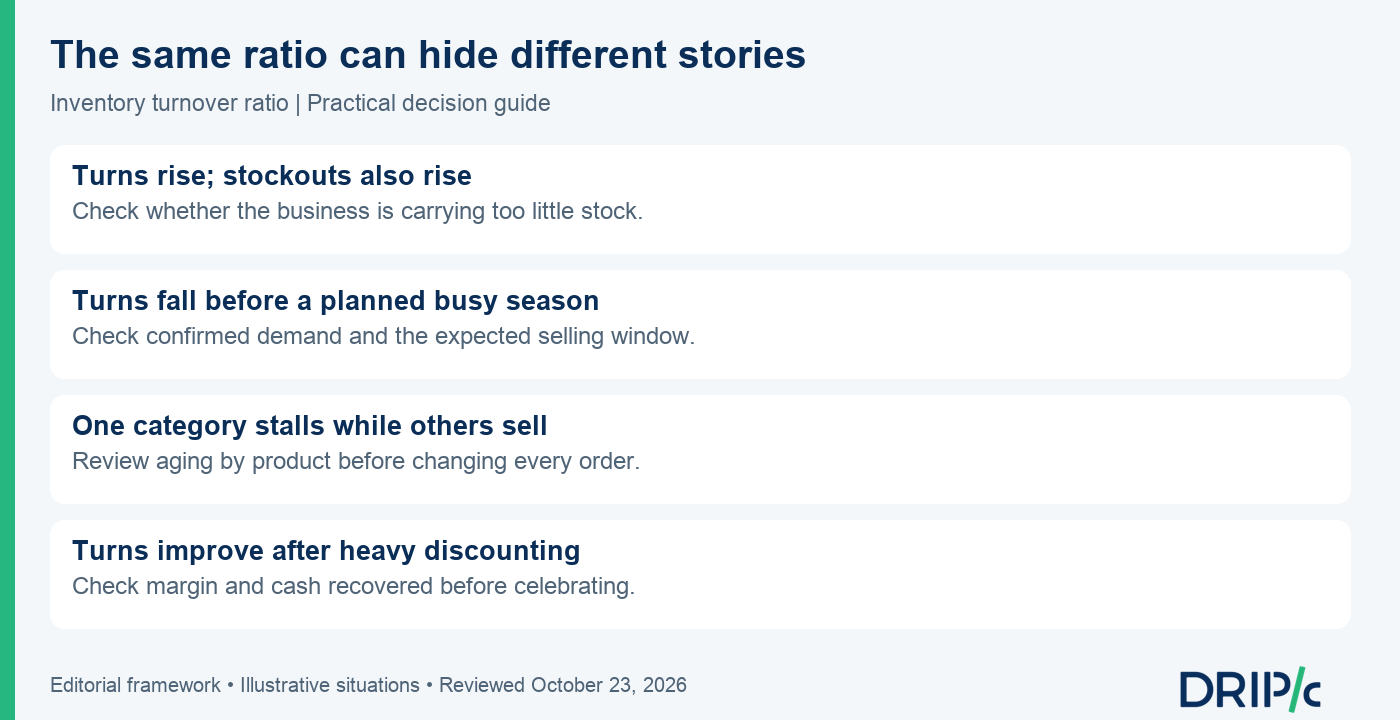
Figure 2. Inventory turnover ratio: four situations and the question to ask before changing purchases. Editorial interpretation guide.
Where Drip Capital Fits
Drip Capital's Vendor Financing pays vendors directly, with repayment terms of up to 90 days, subject to approval and agreed terms. It can support the payment timing around a purchase; the business still needs to assess demand and repayment cash.
Compare the available funding structures, then talk to Drip Capital with the purchase plan, inventory report, and collection forecast. Financing should fit the stock you expect to sell and the cash you expect to collect.
Frequently Asked Questions
Is Higher Inventory Turnover Always Better?
No. Higher turns may accompany efficient sales, but they can also reflect insufficient inventory. Review stockouts, service levels, and margins before calling the change an improvement.
Can I Use Monthly Figures?
Yes. Use that month's cost of goods sold, a representative average inventory balance, and the correct number of days. Compare it with equivalent periods or clearly explain any annualization.
Does Turnover Measure Profit?
No. It measures the relationship between cost of goods sold and average inventory. Discounts can increase sales activity while weakening margins, so assess profitability separately.
What if Average Inventory Is Zero?
Division by zero does not produce a meaningful turnover ratio. Check the records, business model, and averaging period before interpreting the result.