

Photo: Arpit Rastogi. Illustrative image.
An import export business needs a clear answer to three questions: what will you sell, who will buy it, and how will you get paid? A company registration and a list of overseas contacts help, but the first workable transaction is what turns the idea into a business.
Start with a narrow product and customer group. Learn the rules and economics of that trade before adding more countries or categories. This guide covers the main decisions for a US business, from choosing a model to reviewing its first shipment.
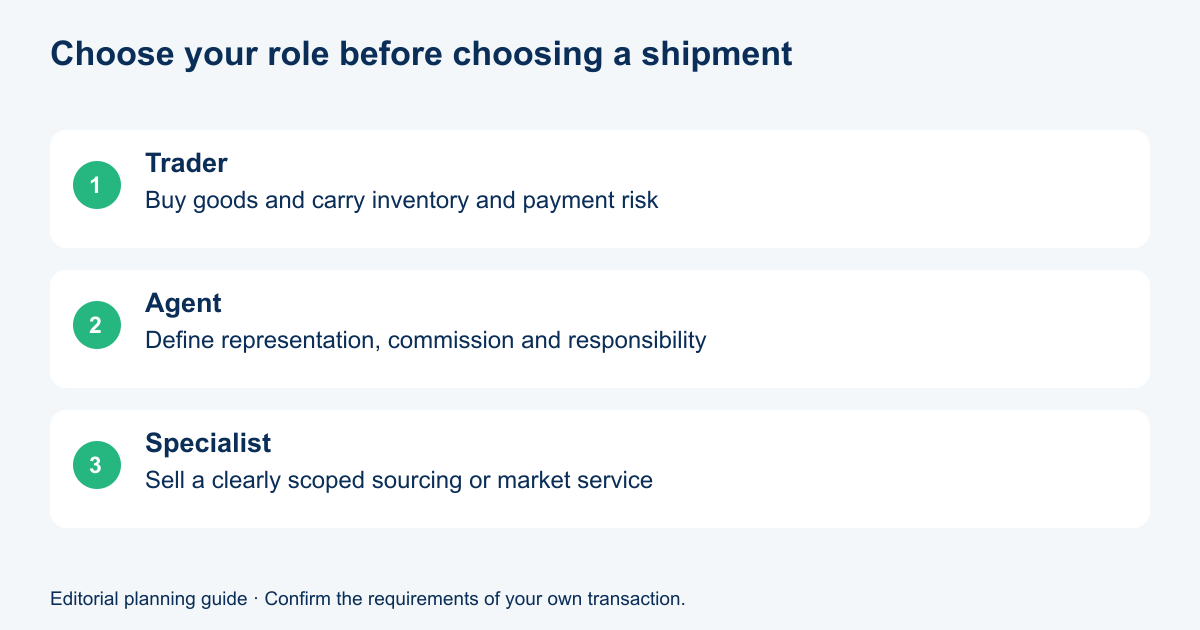
Step one: choose your role
Buy and resell goods
An importer or exporter may purchase goods and sell them for its own account. That means planning for inventory, customer credit, product obligations, and the cash committed between purchase and collection.
Act as an agent or representative
An agent may connect buyers and sellers and earn an agreed commission. The contract should establish whose goods are being sold, who signs the sales agreement, and when the commission is earned. Acting as an agent does not automatically authorize regulated services such as customs brokerage.
Provide a specialized trading service
You might build around sourcing, product knowledge, or access to a specific customer segment. Be precise about the service and responsibility you take on. Avoid a business plan that assumes every participant will handle the difficult parts for you.
Step two: test demand before buying stock
Talk to prospective customers about specifications, order size, pricing, delivery, and payment terms. Find out what would make them change vendors. A buyer saying a product is interesting is different from agreeing to purchase it on workable terms.
When comparing import export business ideas, favor opportunities you can investigate properly. A familiar category with reachable buyers may offer a better starting point than an unfamiliar product that appears popular online. Test the proposition with samples and a clearly defined pilot order.
Step three: register the business and separate its finances
The SBA's launch guidance covers choosing a structure, registration, tax identification, and applicable licenses and permits. Requirements depend on activity and location. Get accounting and legal advice appropriate to the entity you choose.
Open appropriate business banking arrangements, record expenses, and decide who can approve purchases and payments. Establish a process for independently checking changed bank details. These controls are easier to set up before transactions become urgent.
Step four: check the product rules in both markets
For imports into the US
CBP's new-importer guidance is a useful starting point. Identify tariff classification, valuation, origin, admissibility, and any other agency requirements. Food, consumer products, chemicals, and other categories can involve additional rules.
For exports from the US
Start by identifying the relevant export-control jurisdiction. For items subject to the Export Administration Regulations, BIS guidance explains the review of classification, destination, end user, and end use. A familiar commercial product can still require checks.
Review export and import license requirements for the transaction. A company formation certificate is not a substitute for a required product permit or export authorization.
Step five: verify your trading partners
Confirm legal names, addresses, operating history, and the people authorized to make commitments. Check relevant sanctions and restricted-party requirements, and investigate potential matches. Use the restricted-party screening guide to understand why a possible match needs review rather than a quick dismissal.
For vendors, verify the production location and ability to meet the specification. For buyers, assess payment risk and the proposed credit limit. A large first order can be attractive while still creating a collection problem your business cannot absorb.

Before committing, put the purchase and sale next to each other. If the buyer's delivery or payment terms are tougher than the terms you obtained from the vendor, the difference belongs in your operating plan and price.
Step six: calculate the delivered margin
Include the goods, freight, insurance, duties, fees, handling, storage, inspection, financing, and returns you expect to bear. Identify the currency of each cost and receipt. If the exchange rate moves before payment, the margin may move with it.
For an illustrative order, selling goods for $15,000 against a $10,000 factory invoice leaves $5,000 before every other expense. That amount is not net profit. If the remaining costs total $3,000, only $2,000 remains before other overhead and taxes. Replace those sample amounts with written quotes and realistic allowances.
Step seven: agree on the contract and payment method
Specify product standards, delivery responsibilities, inspection, documents, returns, and dispute handling. Review vendor contracts and payment terms before relying on a verbal understanding.
Advance payment, open-account terms, documentary collections, and letters of credit allocate payment risk differently. The International Trade Administration's payment-method guidance explains the main options. Ask a trade-finance specialist about the transaction you are considering. Documents and payment procedures need to match the commercial agreement.
Step eight: arrange logistics and documentation
Agree who books transport, prepares the invoice and packing list, handles customs filings, and receives the cargo. Use Incoterms® 2020 with a named place where appropriate. Confirm what the freight quote excludes.
Maintain one shipment file containing the agreed specifications, order, invoice, transport records, entry or export documents, and delivery evidence. A shared checklist with named owners reduces the chance that everyone assumes someone else filed a required document.
By the numbers: plan the first cash cycle
Put three milestones on the calendar: the first payment out, delivery, and final collection. Then test a delay in each. These are planning scenarios, not a promise about how long a transaction will take.
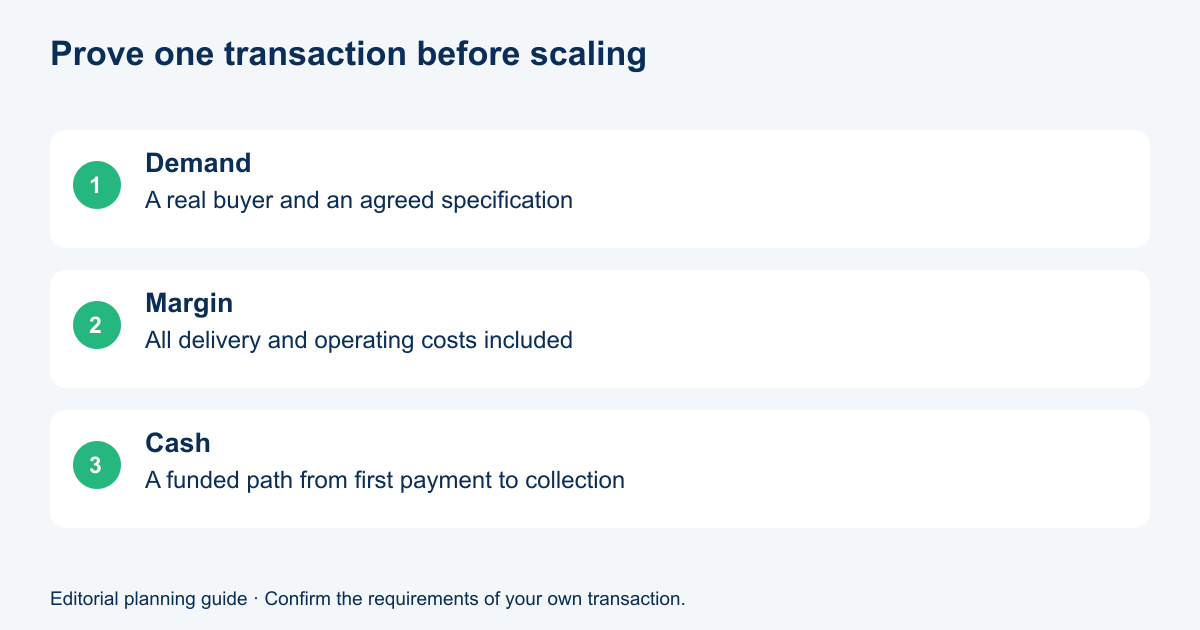
Step nine: run a pilot and review it honestly
Start with a quantity you can inspect, sell, and fund. Measure actual delivered cost, defects, delays, and the time to collect. If the result depends on unpaid work or costs you forgot to count, fix the model before increasing volume.
For someone learning how to become an importer, this review is part of the job. So is maintaining enough working capital for the next order while the previous one is still being paid for. How to start an import export business is ultimately a question of building a repeatable, compliant transaction.
Consider financing with Drip Capital as the business develops
Drip Capital offers Vendor Financing for vendor payments, subject to approval and applicable terms. The provider pays vendors directly, with repayment terms of up to 90 days. A newly formed business should verify current eligibility before including any financing facility in its startup budget; availability is not automatic.
Frequently asked questions
How much money do I need to start?
It depends on your model, product, order size, compliance work, and payment terms. Build a transaction budget and an operating reserve instead of relying on a universal startup-cost figure.
Can I run an import export business without a warehouse?
You may use third-party storage or an agreed direct-delivery arrangement. You still need clear responsibility for receiving, inspection, returns, records, and any importer or exporter obligations.
Should I start with importing or exporting?
Choose the direction where you can verify demand and understand the product and process. Starting with both can multiply the rules, counterparties, and cash commitments you must manage.