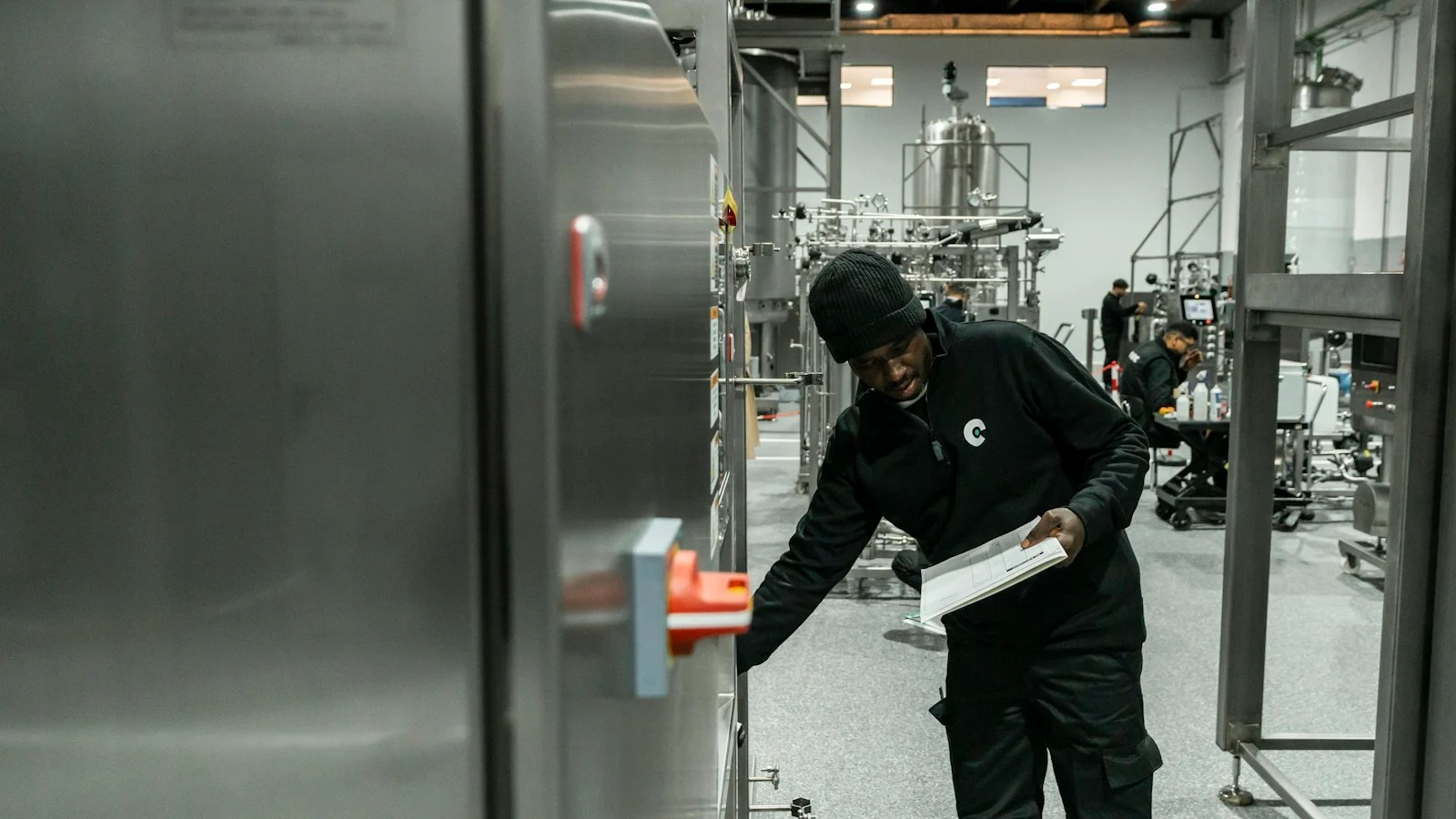

Photo: Photo via Unsplash. Illustrative image.
Moving production closer to your US customers can make replenishment easier to manage. It can also bring tooling costs, a second production setup, unfamiliar paperwork, and a period when you are paying two factories at once.
The case for manufacturing in Mexico needs to survive those details. Compare the cost of usable goods delivered to your customer, and the cash required to get there. A lower factory quote or a shorter distance is one part of that decision.
What does nearshoring to Mexico mean?
Nearshoring to Mexico means locating production or related operations in Mexico closer to a market such as the US. A business might transfer an existing product, add a backup source, or manufacture a new range there.
The International Trade Administration's Mexico manufacturing assessment describes established industrial activity and demand for production technology. That supports investigating the market. It does not establish that a particular city or factory can make your product at the quality and volume you need.
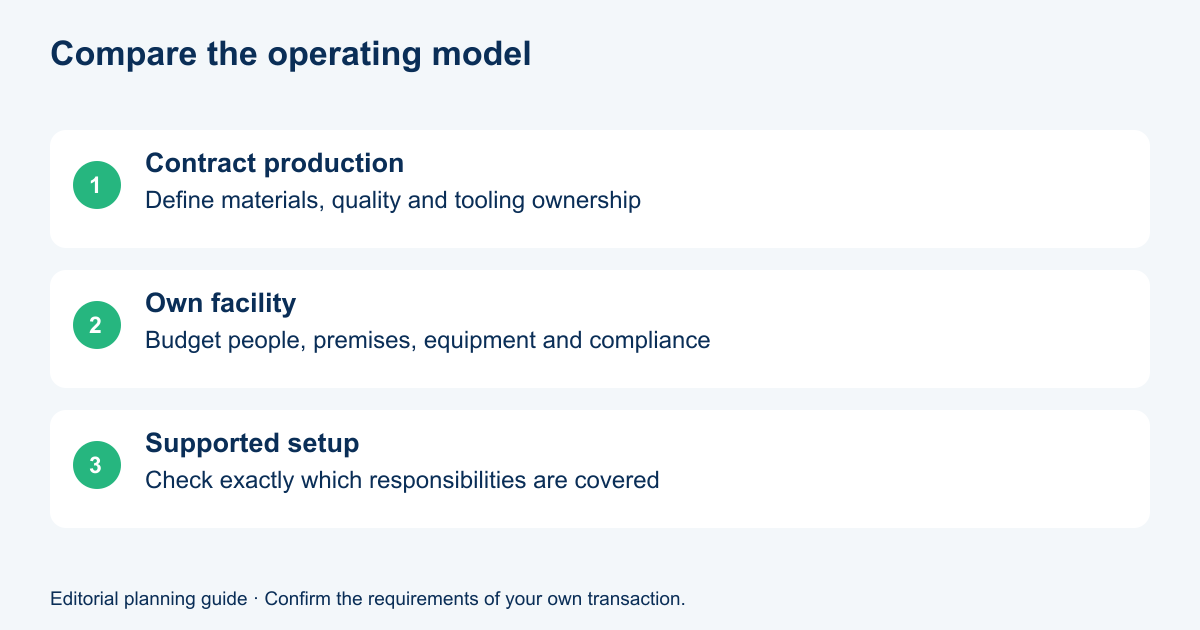
Choose the operating model first
Contract manufacturing
With contract manufacturing in Mexico, you engage another company to produce to an agreed specification. Define responsibility for materials, tooling, quality, workforce, and export documentation. Confirm who owns designs and equipment and what happens when the agreement ends.
Your own manufacturing operation
A directly operated facility gives you a different level of control and responsibility. It requires a plan for premises, people, utilities, maintenance, compliance, and management. The investment should be assessed over the time you realistically expect to use it.
A service-supported setup
Some businesses use local administrative or operational providers to support a manufacturing presence. Examine the exact legal and commercial arrangement with qualified advisers. Do not assume a service package transfers every labor, tax, customs, or environmental responsibility away from your business.
What does manufacturing in Mexico cost?
There is no responsible single percentage saving for every US business. Build a product-level comparison using the same specification and volume on both sides. Ask for quotes that separate recurring unit cost from setup, tooling, and other one-time commitments.
Labor and productivity
Compare total labor cost per acceptable unit. Wage rates alone omit benefits, training, supervision, overtime, absenteeism, and productivity. Ask how many good units a shift can produce and what evidence supports the estimate.
Materials and components
Map where inputs will come from. A Mexican production location may still depend on long-distance imported components. Include minimum quantities, lead times, currency exposure, and the cost of replacing a source that fails qualification.
Premises, utilities, and equipment
Check available electricity, water, connectivity, and transport access at the actual site. The ITA power-sector guide describes Mexico's electricity-sector framework and infrastructure plans. A national investment plan does not confirm capacity at a particular factory.
Logistics, duties, and administration
Price inbound materials, cross-border transport, brokerage, inspections, insurance, storage, and final delivery. Ask how border delays and rejected loads are handled. Include the staff time needed to coordinate documents and resolve discrepancies.

A useful comparison keeps recurring savings and transition costs separate. That makes it easier to see how long the new operation must perform before the move recovers its upfront expense.
What are the potential benefits?
Easier replenishment and visits
Depending on the route and production setup, a closer location may support smaller or more frequent deliveries and easier site visits. Test the actual door-to-door lead time. Border processing, component shortages, or a factory queue can offset some of the distance advantage.
A second production option
Adding Mexico manufacturing capacity can reduce dependence on one production location. It can also spread purchasing volume across factories and complicate quality control. Define whether the new site is a backup, a partial transfer, or the main source before negotiating capacity.
Better alignment with customer requirements
A customer needing frequent releases or late product changes may value a closer production arrangement. Ask what delivery flexibility the factory will actually commit to, how much notice it needs, and how changes affect price.
Does USMCA make the goods duty-free?
Preferential treatment depends on the applicable USMCA rules of origin and claim requirements. Manufacturing, packing, or shipping from Mexico does not automatically make every product qualify. Review the bill of materials and product-specific rule with a customs specialist.
Separate US import treatment from Mexican treatment of materials entering production. The ITA's temporary-entry guidance describes IMMEX as a program for temporary imports linked to export production, subject to requirements and controls. It is not a blanket exemption for every factory or input.
What can make nearshoring more expensive?
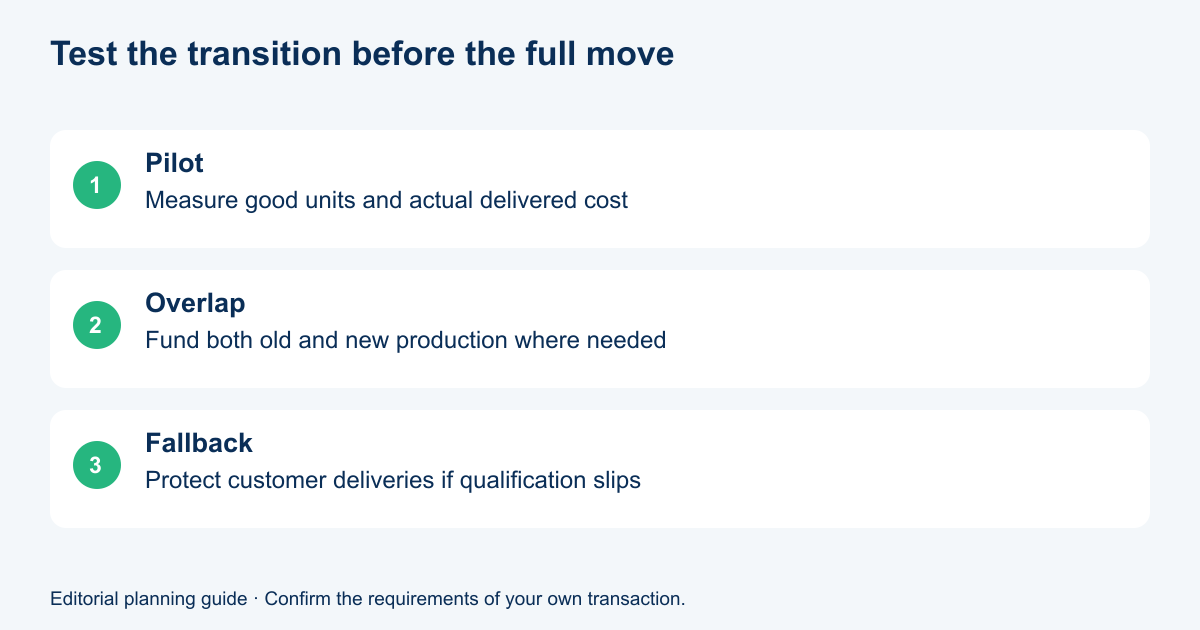
Qualification failures, tooling changes, lower initial output, overlapping inventory, and extra management travel can increase the transition bill. A contract may also require deposits or minimum volumes before production reaches the planned level.
Build a fallback plan for delays. Keep enough existing supply to protect customers while avoiding an open-ended commitment to two production lines. Review your inventory funding and vendor deposit plan together.
By the numbers: test the payback period
In an illustrative scenario, $120,000 of transition costs and $10,000 of genuine monthly operating savings imply a 12-month simple payback. That calculation excludes taxes, financing, and changes in output or demand. If savings arrive later, payback takes longer. Use your own quotes and scenarios.
What should be agreed before the pilot?
Document the specification, acceptance tests, ownership of tooling, payment milestones, capacity, change control, and exit terms. Use vendor-contract planning to connect operational promises to the commercial agreement.
Run a pilot large enough to expose production and delivery problems. Compare quoted cost with the cost of good units actually received. Track the result through a complete working-capital cycle, including customer collection.
Plan vendor payments with Drip Capital
Drip Capital's Vendor Financing pays vendors directly, with repayment terms of up to 90 days, subject to approval and terms. Discuss the payment schedule and realistic production cycle before using financing. A facility can support timing, while the economics and risks of the manufacturing move remain yours to evaluate.
Frequently asked questions
Is manufacturing in Mexico always cheaper than in China?
No. Product complexity, materials, productivity, logistics, duties, volume, and transition costs change the result. Compare the same specification and delivered quantity using current quotes.
Can a small business use a Mexican contract manufacturer?
Potentially, if the factory accepts the product, volume, and commercial terms. Ask about minimum quantities, tooling charges, quality systems, and the support available during qualification.
How long does a manufacturing transfer take?
There is no universal timeline. Sampling, tooling, certification, materials, and pilot results can all affect it. Build the customer-delivery plan around verified milestones and a fallback source.