

Illustrative warehouse photo by Bernd Dittrich on Unsplash.
Buying a forklift, delivery vehicle, or packaging machine can also change your tax bill. The Section 179 deduction lets a business expense qualifying purchases in the year they are placed in service, subject to limits. That can bring part or all of the deduction into the current year.
For 2026, the headline limit is $2.56 million. But the amount your business can claim depends on the purchase, business use, total equipment spending, and taxable business income. Here is how those checks fit together.
What Is the Section 179 Deduction?
Section 179 is an election to deduct the cost of qualifying business property sooner. The IRS depreciation overview explains how this fits into recovering the cost of assets used over multiple years.
A deduction reduces taxable income. A $50,000 deduction therefore does not mean the government pays $50,000 toward your purchase. The tax saving depends on your tax position, and the vendor still needs payment under your contract.
By the Numbers: Section 179 Limits for 2026
These IRS inflation-adjusted limits apply to tax years beginning in 2026:
$2,560,000: maximum deduction before other restrictions.
$4,090,000: total qualifying property cost above which the maximum starts shrinking.
$32,000: separate Section 179 cap for each covered heavy SUV.
The 2025 tax law increased the base deduction to $2.5 million. Inflation adjustments raised it for 2026, so a guide using $2.5 million as the current-year maximum needs that distinction.
How the Spending Limit Works
The maximum falls by one dollar for each dollar of qualifying property placed in service above the spending threshold. At $6.65 million, the 2026 maximum reaches zero. Count all qualifying Section 179 property placed in service when applying this test, including items for which you choose another depreciation treatment.
How the Income Limit Works
The deduction is also limited by taxable income from actively conducting trades or businesses, calculated under the Section 179 rules. Amounts blocked by this income limit can generally carry forward. Partnerships and S corporations have additional entity and owner-level rules; your accountant should calculate the available deduction. IRS guidance
What Equipment Qualifies for Section 179?
Common candidates include purchased machinery, forklifts, computers, office furniture, and qualifying off-the-shelf software. Certain improvements to existing nonresidential buildings, including roofs, HVAC, fire protection, and security systems, can also qualify. Land and an ordinary building purchase generally fall outside this deduction. IRS property requirements
Equipment You Use vs. Equipment You Sell
A distributor's warehouse forklift is an operating asset. Forklifts the distributor holds for sale are inventory, which cannot be depreciated. The role of the purchase determines which rules to examine.
Our Equipment Financing vs. Working Capital guide explains how that same distinction affects funding choices.
New, Used, and Mixed-Use Purchases
Used equipment can qualify. The purchase must meet the acquisition rules, including restrictions on purchases from related parties. For mixed personal and business use, business use must exceed 50% in the year the asset enters service, and only the business portion enters the deduction calculation. IRS qualification rules
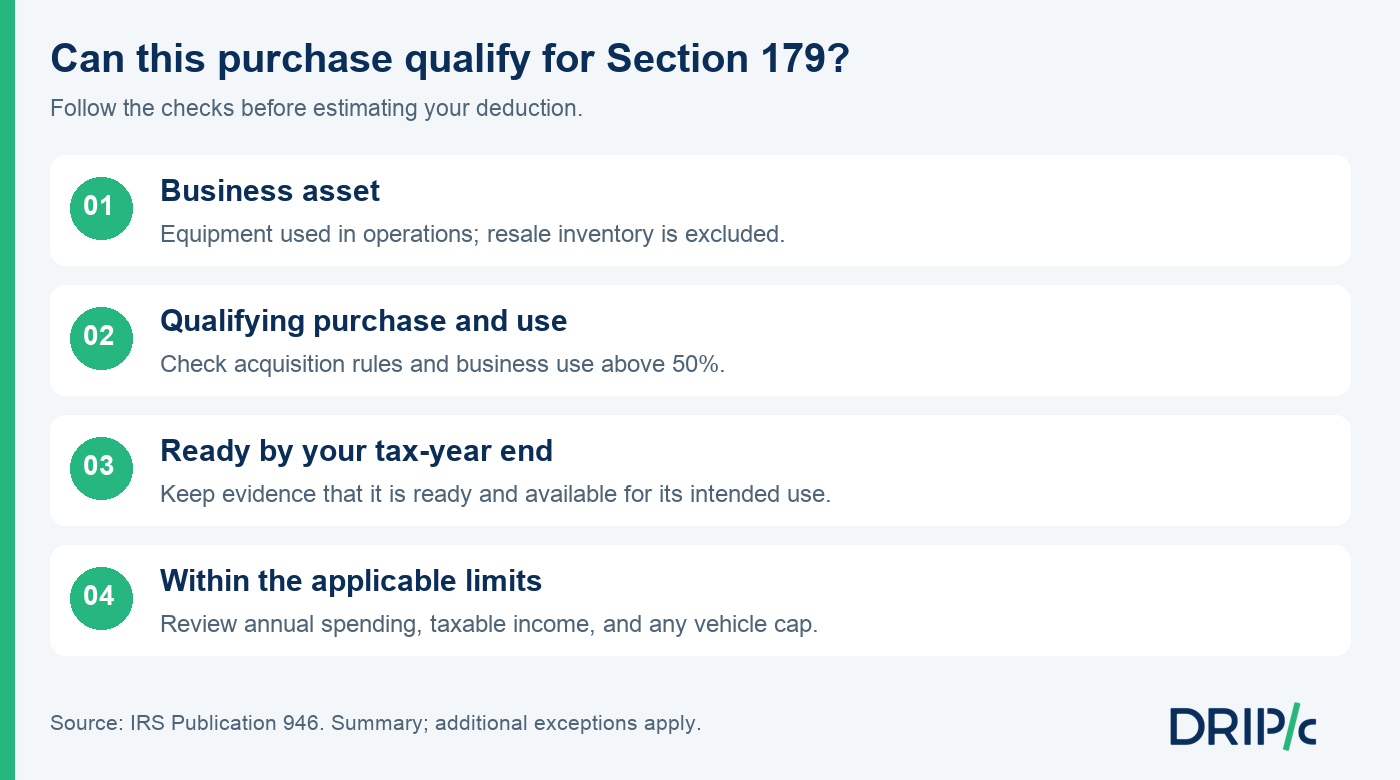
Figure 1. Section 179 deduction: four checks before estimating a write-off. Sources: IRS Publication 946 and 2026 limits.
Section 179 Deduction Vehicle List: Which Categories Qualify?
A useful Section 179 deduction vehicle list starts with the exact vehicle's specifications. Model names can cover different configurations. Ask for the manufacturer's weight rating, seating layout, cargo dimensions, and purchase documents before estimating a deduction.
Cars, Light Trucks, and Vans
Passenger automobiles are subject to annual depreciation limits that also restrict the combined Section 179 and depreciation deduction. IRS definitions distinguish cars from trucks and vans when applying the 6,000-pound weight test. Have your accountant classify the vehicle before using a deduction calculator. IRS vehicle guidance
Heavy SUVs
Covered passenger vehicles rated over 6,000 pounds and no more than 14,000 pounds gross vehicle weight have a separate Section 179 SUV limit of $32,000 for 2026. This is a Section 179 limit; additional depreciation may be available on remaining qualifying cost.
Gross vehicle weight rating describes the vehicle's maximum rated loaded weight. Check the manufacturer's label, and avoid substituting the vehicle's empty weight.
Pickups and Work Vehicles With Special Configurations
The heavy-SUV cap has exceptions. These include vehicles with a cargo area at least six feet long that is not readily accessible from the passenger compartment, vehicles designed for more than nine passengers behind the driver, and certain fully enclosed cargo vehicles meeting detailed body-design tests. IRS exception criteria
An exception removes that particular cap. The general deduction limits, business-use requirement, and other applicable rules still matter.
Before committing, put the purchase price, delivery costs, and payment dates beside your normal operating expenses. A tax estimate and a cash budget answer different questions.

Review vendor contracts and payment terms early, especially when a deposit is due before delivery or installation.
What Is the Section 179 Deadline?
For a calendar-year business claiming a 2026 deduction, qualifying property must be placed in service by December 31, 2026. A fiscal-year business uses its own tax-year end. The IRS defines placed in service as ready and available for its intended use. Placed-in-service guidance
Paying a deposit in December will not establish that date for a machine that becomes operational in January. For imported equipment, work backward through shipping, customs clearance, installation, and testing. Keep records showing when the equipment became ready for use.
Section 179 vs. Bonus Depreciation
Section 179 vs. bonus depreciation is a choice about eligibility, timing, and how much cost to deduct. Section 179 lets you elect an amount for individual qualifying assets, subject to its spending and income limits.
The IRS confirms 100% bonus depreciation for eligible property acquired and placed in service after January 19, 2025. Acquisition rules and exceptions apply. Section 179 is generally calculated before bonus depreciation on remaining qualifying basis; the same cost cannot be deducted twice.
The bonus depreciation guide covers that provision separately. Ask your tax adviser to compare available treatments, including state rules, before making the election.
How to Claim Section 179 and Keep the Records
The election is made in Part I of Form 4562. Listed property, including many vehicles, also requires Part V. Keep the invoice, asset description, acquisition details, service date, and evidence of business use.
Vehicle records should support business mileage and purpose. If business use later drops to 50% or less during the recovery period, some deduction may have to be brought back into taxable income. IRS recordkeeping and recapture rules
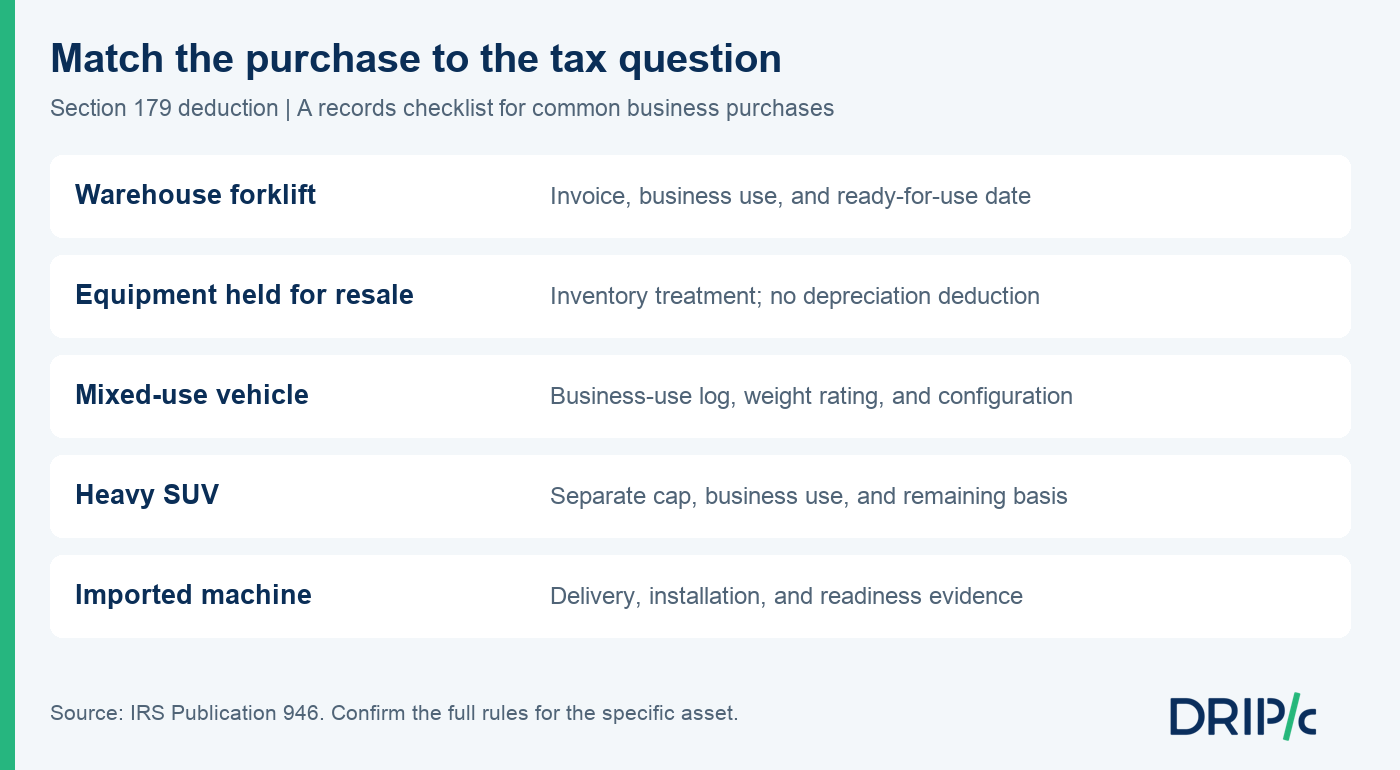
Figure 2. Section 179 deduction: purchase situations and the records to check. Source: IRS Publication 946.
Plan the Purchase Alongside Working Capital
A year-end purchase can leave less cash for payroll, freight, or the next inventory order. Compare the timing of the potential tax benefit with actual payment obligations. A purchase still needs to make commercial sense if the deduction is smaller or arrives later than expected.
Use the small-business funding comparison to evaluate repayment timing and total cost alongside the tax calculation.
Where Drip Capital Fits
Drip Capital's Vendor Financing pays vendors directly, with repayment terms of up to 90 days. Its Line of Credit provides revolving access to working capital, with each draw repaid over six monthly installments.
Discuss permitted uses, transaction eligibility, and repayment cash before committing. Financing approval does not establish tax eligibility. Talk to Drip Capital about the cash requirements around your purchase while your accountant confirms the deduction.
Frequently Asked Questions
Is the 2026 Section 179 Limit $2.5 Million?
The inflation-adjusted maximum is $2.56 million for tax years beginning in 2026. The $2.5 million figure applies to 2025, and both years have additional restrictions.
Does Every Vehicle Over 6,000 Pounds Qualify for a Full Write-Off?
No. Vehicle classification, configuration, business use, and applicable caps affect the result. Covered heavy SUVs have a separate Section 179 cap, while bonus depreciation requires its own eligibility review.
Can I Claim Section 179 on Used Equipment?
Yes, qualifying used equipment purchased for business use can be eligible. Related-party purchases and other excluded acquisitions do not qualify, so retain the purchase records.
Can Inventory Qualify for Section 179?
Goods held primarily for sale to customers are inventory and cannot be depreciated. Equipment purchased to operate your business may qualify when it meets the Section 179 requirements.